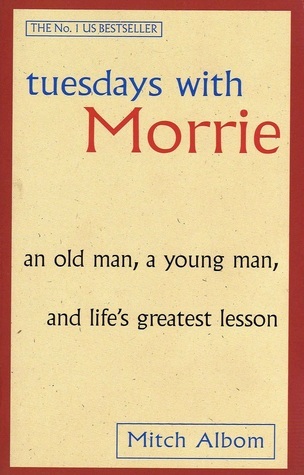
Tuesdays with Morrie: An Old Man, a Young Man, and Life's Greatest Lesson
Mitch Albom
We may earn a commission on purchases — at no cost to you. As an Amazon Associate we earn from qualifying purchases. Disclosure.
Tuesdays with Morrie is Mitch Albom's memoir of his visits with his former university professor, Morrie Schwartz, who is dying of amyotrophic lateral sclerosis (ALS). Over the course of fourteen weeks, Albom sits with his dying teacher each Tuesday to learn about life, death, love and what matters, and records those conversations. It is a brief, profound meditation on mortality and meaning, told with both tenderness and clarity, and it became a global phenomenon for its unflinching yet comforting approach to dying.
- 1Morrie Schwartz was Albom's beloved Brandeis University professor decades earlier, and Albom reconnects with him after learning of his ALS diagnosis.
- 2Albom visits Morrie every Tuesday for fourteen weeks, from late September through early December, as Morrie's disease progresses.
- 3Morrie, even as he is dying, remains engaged with life, asking difficult questions about how to die well and what brings meaning to existence.
- 4The book is organised around themes: the world, self-pity, regret, death, family, emotions, forgiveness, time, fear, the meaning of life.
- 5Morrie's philosophy is that we should accept death and devote our remaining time to love, relationship and the people around us.
- 6Albom's journey is partly his own, as he confronts his alienation from living and the gap between what he does and what he values.
Key ideas
The dying as teacher
Morrie's impending death clarifies rather than confuses his thinking. His illness forces him to ask what truly matters, and the answers he arrives at, love, connection, acceptance, come not from philosophy but from lived experience. Albom treats Morrie as a teacher because he has something to teach about how to live.
Acceptance as the path through fear
Rather than deny or rage against his dying, Morrie practices acceptance. He acknowledges his fears and griefs fully, and in doing so, finds a way to move through them rather than being paralysed by them. Albom learns that acceptance is not resignation but a kind of freedom.
The isolation of modern life
Albom is initially a man caught in the trap of busy-ness, of making money and climbing without pausing to ask why. His reconnection with Morrie forces him to confront how much of his life is spent away from the people and pursuits that matter. The memoir is partly about the cost of that alienation.
Tuesday as ritual
The weekly visits become a sacred ritual for both men. The structure of returning each Tuesday, of sitting and speaking and being present, transforms the visits from sickbed calls into a practice of meaning-making. Ritual creates space for important things.
Questions as a form of love
Morrie's willingness to engage with Albom's questions, and Albom's willingness to ask them, is the core of their relationship. The conversations are not just about extracting wisdom but about showing up and paying attention to another person with full presence.
The democratisation of dying
Albom treats Morrie's death with both particularity and universality. His experience is unique, but the questions it raises are ones every human faces. The book suggests that we can all learn from how Morrie dies and that death, properly approached, can teach us how to live.
Who is it for?
Readers who want a brief, profound meditation on mortality and meaning will find this transformative, and it has resonated globally with readers approaching major life transitions. It suits anyone facing loss, questioning their life choices, or simply curious about what death can teach. It is a book that works both for grieving and for celebrating life.
Full summary
Mitch Albom, a newspaper columnist and sports writer caught in the treadmill of career ambition and busyness, learns that Morrie Schwartz, a beloved professor from his university days decades earlier, is dying of ALS. Albom, who has drifted away from meaningful relationships and philosophical reflection, decides to visit.
What begins as a visit turns into a commitment: Albom visits Morrie every Tuesday for fourteen weeks, from late September through early December, as Morrie's disease progresses and his body weakens. The visits become a regular ritual, a space apart from Albom's ordinary life.
Over those weeks, Morrie and Albom sit together and talk about life and death, fear and acceptance, the meaning of relationships and the question of how to live well. Morrie, even as he is dying, remains engaged and curious, asking Albom questions in return.
Morrie speaks openly about his own fears and griefs: the loss of his independence, the awareness of his own dying, his sadness at leaving people he loves. But he does not indulge in self-pity; instead, he moves through his feelings by naming them and by turning his attention outward to those around him.
Albom finds himself transformed by the experience. His usual defences, busyness, irony, distance, fall away in the presence of someone genuinely dying. He finds himself asking questions he has been avoiding, and Morrie's answers force him to confront his own alienation from life and relationships.
The conversations touch on themes both concrete and universal: family and forgiveness, work and ambition, time and mortality, the self and the role of community. Morrie argues passionately that we are too separate, too isolated, and that the solution is to love fully and to maintain the bonds with others.
Albom's wife and Morrie develop their own relationship, and Albom watches as people who love Morrie visit and say goodbye. The visits become less interviews and more simply presence, two people sitting together as Morrie approaches death.
The memoir ends with Morrie's death and Albom's reflection on what his dying teacher has taught him. Albom emerges changed, with a clearer sense of what matters and of how to live in the face of mortality. The book closes with a final Tuesday that never comes, a small heartbreak and a reminder of life's fragility.