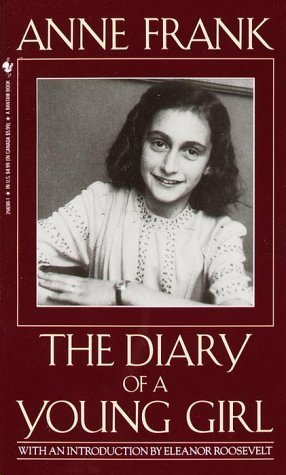
The Diary of a Young Girl
Anne Frank
We may earn a commission on purchases — at no cost to you. As an Amazon Associate we earn from qualifying purchases. Disclosure.
The Diary of a Young Girl is the real journal Anne Frank kept while hiding from the Nazis in a concealed Amsterdam annexe for two years before her family's betrayal and deportation. It is at once an ordinary teenager's diary, full of quarrels, crushes and self-examination, and one of the most important firsthand documents of the Holocaust, precisely because it records the period through the eyes of a gifted, ordinary girl rather than a statistic. Its power is that Anne is fully, vividly alive on every page, which makes what the reader knows is coming almost unbearable.
- 1Anne received the diary for her thirteenth birthday in June 1942, weeks before her family went into hiding.
- 2The Frank family, along with the van Pels family and dentist Fritz Pfeffer, hid in a secret annexe behind Otto Frank's business premises on the Prinsengracht.
- 3Anne addresses her entries to an imaginary friend she calls Kitty, using the diary as a confidante through the isolation of hiding.
- 4The eight in hiding depended entirely on a small group of trusted helpers, including Miep Gies, who brought food and news at great personal risk.
- 5The diary ends abruptly in August 1944 when the annexe was betrayed and raided; Anne died in Bergen-Belsen in early 1945, only weeks before liberation.
- 6Otto Frank, the sole survivor of the eight, published the diary after the war, fulfilling Anne's own recorded ambition to become a writer.
Key ideas
An ordinary girl in an extraordinary trap
Much of the diary's force comes from how normal Anne is: she bickers with her mother, resents being compared to her sister Margot, develops feelings for Peter van Pels, and frets about her own personality. Anne Frank was a real adolescent, and the mundane texture of her life makes the surrounding horror concrete rather than abstract.
Writing as survival and ambition
Anne treats the diary as a lifeline and, increasingly, as a serious literary project. She revised earlier entries herself, hoping to publish a book called The Secret Annexe after the war, having heard a radio broadcast urging Dutch citizens to preserve wartime testimony. Her identity as a writer is not retrospective; she claimed it while hiding.
The strain of confinement
Eight people shared cramped rooms in total silence during business hours for over two years, unable to go outside, dependent on others for everything. Anne records the friction with unusual honesty: the pettiness, the hunger, the fear of every unfamiliar sound, and her mother and Mrs van Pels grating on each other in impossible proximity.
Interior growth under pressure
Over the two years the reader watches Anne mature from a chatty child into a reflective young woman who examines her own faults, her relationships, and her beliefs. Her later entries about her divided nature and her hopes for who she wants to become are strikingly self-aware for a girl of fifteen.
Faith in people despite everything
Even while hunted, Anne records her conviction that people are truly good at heart, one of the diary's most quoted and most debated lines. Read against her fate, it is not naivety but a deliberate act of hope from inside the worst of circumstances, which is part of why the sentence has endured.
The helpers and ordinary courage
The people who kept the annexe supplied, chiefly Miep Gies, Bep Voskuijl, Johannes Kleiman and Victor Kugler, risked their own lives daily. It was Miep who saved Anne's scattered papers after the arrest and returned them to Otto. The diary is also a record of everyday moral courage under occupation.
Notable quotes
“I still believe, in spite of everything, that people are truly good at heart.”
— entry of 15 July 1944
Who is it for?
Every reader should encounter this at least once, and it is especially powerful for young people meeting the Holocaust through a voice close to their own age. It rewards anyone interested in history told from the inside, in diaries and coming-of-age, or in the moral questions of occupation. Readers moved by Night or Maus will find it an essential companion.
Full summary
Anne Frank, a Jewish girl living in Amsterdam, receives a red-checked diary for her thirteenth birthday in June 1942. She begins recording ordinary schoolgirl life: friends, boys, teachers, and the growing web of anti-Jewish restrictions the German occupiers have imposed on the city.
Within weeks, Margot, Anne's older sister, is summoned to report for a labour camp. Rather than comply, the Frank family goes into hiding in a secret annexe concealed behind Otto Frank's business, its entrance eventually hidden by a moveable bookcase. They are soon joined by the van Pels family and later by the dentist Fritz Pfeffer.
Anne addresses her entries to Kitty, an imagined friend, pouring into the diary everything she cannot say aloud. She describes the strict rules of hiding: absolute silence during working hours below, no going outside, total dependence on the helpers who bring food, books and news from the world they can no longer enter.
Living on top of one another under constant fear breeds tension. Anne clashes with her mother, feels overshadowed by the studious Margot, and finds the adults petty and critical. She records these frustrations with candour, alongside her fear during air raids and burglaries that threaten to expose them all.
As months pass, Anne grows closer to Peter van Pels, and the diary follows the tentative, intense first romance of two teenagers with nowhere else to turn. It also traces her deepening inner life: her ambitions as a writer, her reflections on womanhood, faith, and the kind of person she is determined to become.
Anne learns, from a radio broadcast, that wartime diaries and documents will be valuable after liberation, and begins rewriting her entries with a book in mind. Her later pages show a young woman thinking seriously about her own contradictions and about a future she is sure will come.
In August 1944 the annexe is betrayed. The police raid the hiding place and arrest everyone inside. Miep Gies later gathers Anne's scattered papers from the floor and keeps them safe, unread, in the hope of returning them to their owner one day.
The eight are deported. Anne and Margot are sent to Bergen-Belsen, where both die of typhus in early 1945, only weeks before the camp is liberated. Otto Frank alone survives. He returns to Amsterdam, is given Anne's diary by Miep, and, honouring the writer his daughter had already become, sees it published.