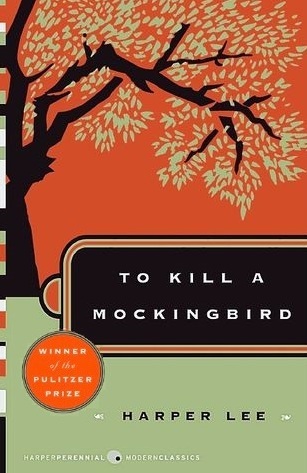
To Kill a Mockingbird
Harper Lee
We may earn a commission on purchases — at no cost to you. As an Amazon Associate we earn from qualifying purchases. Disclosure.
To Kill a Mockingbird is Harper Lee's novel of a Depression-era Alabama childhood, narrated by a grown Scout Finch looking back on the two years when her father defended a Black man accused of raping a white woman. The book braids two threats together, the trial of Tom Robinson and the neighbourhood myth of the reclusive Boo Radley, to make one argument: that most fear is manufactured by hearsay, and that courage means doing right when you already know you will lose. It has become the standard American text on conscience precisely because it locates injustice in ordinary, well-mannered neighbours.
- 1Scout Finch narrates as an adult remembering ages six to nine in Maycomb, Alabama, in the mid-1930s.
- 2Atticus Finch defends Tom Robinson against a charge of raping Mayella Ewell, and proves in open court that Mayella's injuries came from a left-handed man while Tom's left arm is crippled.
- 3The all-white jury convicts Tom anyway, and he is shot dead attempting to escape prison.
- 4Bob Ewell, humiliated despite winning, attacks Scout and Jem on a dark road on Halloween night.
- 5Boo Radley, the shut-in the children have spent years mythologising, saves them, and Sheriff Tate quietly declines to expose him to public attention.
- 6The mockingbird stands for anyone harmless destroyed by other people's fear, a figure that covers both Tom Robinson and Boo Radley.
Key ideas
Climbing into someone else's skin
Atticus gives Scout a single rule for understanding people: consider things from their point of view and walk around in it a while. The novel then tests that rule on progressively harder subjects, from her teacher Miss Caroline to Mrs Dubose to Mayella Ewell. The final page delivers it literally when Scout stands on the Radley porch and sees her own street as Boo has watched it for years.
Courage is not a man with a gun
Atticus makes his children read to Mrs Dubose, a vicious old woman who insults him daily, and only after her death explains she was breaking a morphine addiction so she could die free of it. He calls that real courage: knowing you are licked before you begin and starting anyway. It is the same standard he applies to taking Tom Robinson's case.
The trial that is decided before it starts
Atticus dismantles the prosecution completely. There was no doctor, the bruising is on the right side of Mayella's face, and Bob Ewell is revealed as left-handed while Tom's left arm was destroyed in a cotton gin. The jury convicts regardless, and Jem's shock at that verdict is the moment the novel's childhood ends.
Mayella Ewell is a victim too
Lee gives Mayella the most uncomfortable position in the book: nineteen, motherless, minding seven children, so starved of kindness that she kissed a Black man who had been helping her out of pity. Her false accusation is the only currency her whiteness gives her. Scout realises that Mayella must be the loneliest person in Maycomb.
Boo Radley and the danger of stories
For most of the book Boo is a ghoul who eats squirrels and stabbed his father with scissors, assembled entirely from gossip. What actually happens is that he mends Jem's trousers, leaves gifts in a tree, puts a blanket around Scout during a fire and finally kills Bob Ewell to protect them. The children's imagined monster is the person who saves their lives.
Maycomb's respectable racism
Lee is careful that the villains are not only the Ewells. Aunt Alexandra's missionary circle weeps for the Mruna tribe in Africa while complaining about sulky local servants, and Miss Gates condemns Hitler on the way home from cheering a conviction. The point is that the trial's outcome required the participation of decent, church-going people.
Notable quotes
“It's a sin to kill a mockingbird.”
— Miss Maudie, Ch. 10
Who is it for?
Anyone who wants a short, warm, funny novel that also happens to be one of the clearest moral educations in American fiction should start here, and readers who first met it as a school assignment often find it a completely different book as an adult. It is ideal for parents and teenagers to read at the same time, since the childhood comedy and the courtroom drama work on different levels. Readers drawn to The Help, Just Mercy or A Lesson Before Dying will find its DNA everywhere.
Full summary
Maycomb, Alabama, in the middle of the Depression. Scout Finch, her older brother Jem and their summer friend Dill spend their days trying to make Arthur 'Boo' Radley come out of the house he has not left in years. Their father Atticus is a widowed lawyer raising them with the help of Calpurnia, the family's Black cook.
Small gifts start appearing in a knothole of the Radley oak: chewing gum, a spelling medal, two soap figures carved to look like Scout and Jem. Nathan Radley eventually fills the hole with cement. During a house fire on a freezing night, someone drapes a blanket over Scout without her noticing who.
Atticus is appointed to defend Tom Robinson, and Maycomb turns on the family. Scout fights children who repeat what their parents say. Atticus sits outside the jail the night before the trial and a lynch mob arrives, which disperses only when Scout, oblivious to the danger, greets Mr Cunningham by name and asks after his son.
At the trial the children watch from the coloured balcony beside Reverend Sykes. Atticus establishes that Mayella's injuries were inflicted by a left-handed assailant, that no doctor was ever called, and that Tom's left arm has been useless since a childhood accident. Tom's fatal admission is that he felt sorry for her.
The jury convicts. Jem, who had been certain of acquittal, cannot understand it. Tom is sent to Enfield Prison Farm and shot seventeen times running at the fence, an escape attempt Atticus reads as a man deciding not to wait for another white man's decision.
Bob Ewell wins his case and is still humiliated by what the courtroom heard about him. He spits in Atticus's face, harasses Tom's widow Helen, and breaks into the judge's house. Atticus insists there is nothing to worry about.
On Halloween night Jem walks Scout home from a school pageant, still in her wire ham costume. Ewell attacks them in the dark. Jem's arm is broken, Scout is saved by the costume, and a stranger carries Jem home. Bob Ewell is found dead with a kitchen knife under his ribs.
Sheriff Tate refuses to record it as anything but Ewell falling on his own knife, because dragging the shy man who intervened into the public eye would be its own kind of sin. Scout, who finally understands, walks Boo Radley home, stands on his porch, and sees the whole neighbourhood as he must have seen it.