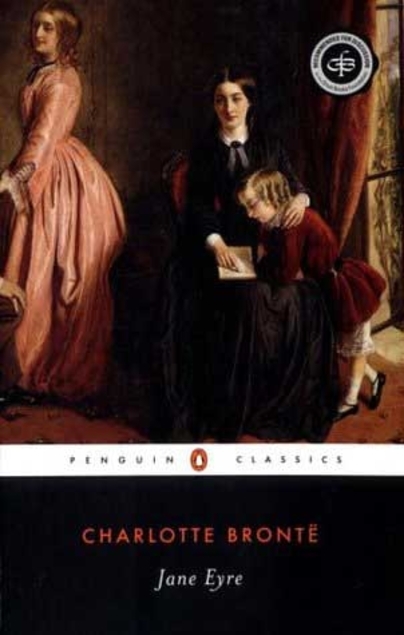
Jane Eyre
Charlotte Brontë
We may earn a commission on purchases — at no cost to you. As an Amazon Associate we earn from qualifying purchases. Disclosure.
Jane Eyre is Charlotte Bronte's novel about an orphaned governess who insists on her own dignity and moral independence in a world determined to deny her both. Following Jane from a cruel childhood through her love for her employer, the brooding Mr Rochester, and the terrible secret that halts their marriage, Bronte created one of literature's first heroines to demand equality on the grounds of feeling and conscience rather than status. It is a Gothic romance, a coming-of-age story, and a quietly radical assertion that a poor, plain woman has as much soul and worth as anyone.
- 1Orphaned Jane is raised resentfully by her aunt Mrs Reed and then sent to Lowood, a harsh charity school where conditions are brutal and her friend Helen Burns dies.
- 2Jane becomes governess at Thornfield Hall to Adele, the ward of the wealthy, sardonic Edward Rochester, and the two fall in love across the gulf of class.
- 3Their wedding is stopped by the revelation that Rochester is already married to Bertha Mason, a woman he keeps locked in the attic due to severe mental illness.
- 4Jane refuses to become Rochester's mistress and flees Thornfield with nothing, nearly dying before being taken in by the Rivers siblings, who prove to be her cousins.
- 5St John Rivers pressures Jane to marry him and join his missionary work, but she refuses to enter a loveless union that would erase her.
- 6Jane returns to find Thornfield burned, Bertha dead, and Rochester blinded and maimed but free, and marries him as an equal on her own terms.
Key ideas
A heroine who demands equality of soul
Jane's defining trait is her refusal to be diminished. In her famous declaration to Rochester she insists that although she is poor, plain and obscure, she has as much heart and soul as he does and speaks to him as an equal spirit. Bronte gave Victorian fiction a heroine whose worth rests on conscience and feeling rather than beauty or rank.
Conscience over passion
When Jane discovers Rochester is already married, she loves him no less but will not live as his mistress, because doing so would violate her own principles and self-respect. She chooses her integrity over her happiness, walking away from everything. This insistence that she will not betray herself even for love is the novel's moral centre.
The madwoman in the attic
Bertha Mason, Rochester's hidden first wife, is one of literature's most analysed figures, read variously as a Gothic device, a symbol of colonial and marital oppression, and a dark double of Jane's own suppressed anger. Her presence complicates any simple reading of Rochester as a romantic hero and gives the novel its unsettling depth.
Two false paths, two suitors
Jane is offered two versions of a life that would erase her: Rochester's offer to make her a mistress, all passion and no legitimacy, and St John Rivers's offer of a loveless missionary marriage, all duty and no feeling. She rejects both, refusing to be either a kept woman or a self-denying instrument, and holds out for a union that honours her whole self.
The long road to independence
Only when Jane inherits money from an unknown uncle and gains cousins and a family of her own does she come to Rochester as a genuinely independent woman. Bronte withholds the marriage until Jane has means, kin and self-command, so that when she finally chooses Rochester she does so freely, not out of need.
Equality achieved through reversal
The famous ending, in which Jane returns to a blinded, maimed Rochester and a ruined Thornfield, is often read as Bronte levelling the couple. Stripped of his wealth, sight and power, and with Jane now independent, Rochester meets her at last as an equal. Her declaration, Reader, I married him, is a statement of agency, not submission.
Notable quotes
“Reader, I married him.”
— Ch. 38, opening line
Who is it for?
Readers who want one of the great combinations of romance, Gothic atmosphere and fierce moral independence will find Jane an unforgettable and surprisingly modern companion. It rewards anyone interested in the growth of a strong-willed heroine or the roots of the feminist novel. Readers of Wuthering Heights, Rebecca or Pride and Prejudice will find it essential.
Full summary
Jane Eyre is an orphan raised grudgingly by her wealthy aunt, Mrs Reed, at Gateshead, where she is bullied and unloved. After a fierce act of self-defence against her cruel cousin, she is sent away to Lowood, a charity school run on cold, punitive principles by the hypocritical Mr Brocklehurst.
At Lowood Jane endures hunger, cold and humiliation, but also finds her first real friendship, with the saintly, forbearing Helen Burns, who dies of consumption during an epidemic. Jane survives, excels, and eventually stays on as a teacher before deciding to seek a wider life.
She takes a post as governess at Thornfield Hall, teaching Adele, the young French ward of the estate's absent master. When that master, Edward Rochester, arrives, Jane finds him abrupt, sardonic and compelling. Over months of conversation, a deep intellectual and emotional bond forms between the plain governess and the wealthy gentleman.
Strange events trouble Thornfield: mysterious laughter, a fire in Rochester's bed, a violent attack on a visitor. Rochester nonetheless declares his love and proposes, and Jane, astonished to be chosen, accepts, believing she has found both passion and a partner who values her mind and spirit.
At the altar, the ceremony is halted by the revelation that Rochester is already married. His wife, Bertha Mason, is alive but violently insane, and he has kept her confined in Thornfield's attic for years. He begs Jane to live with him abroad as his wife in all but law.
Though she loves him, Jane refuses to compromise her principles and become his mistress. She leaves Thornfield secretly, with almost no money, and nearly perishes of hunger and exposure on the moors before being taken in by the Rivers siblings, who nurse her back to health.
The Rivers turn out to be her cousins, and Jane inherits a fortune from an uncle she never knew, which she insists on sharing equally with them. The austere, ambitious St John Rivers presses her to marry him and accompany him as a missionary to India, offering duty without love, and Jane, tempted by purpose but repelled by the coldness, refuses.
Sensing Rochester calling to her, Jane returns to Thornfield to find it burned to ruins. Bertha set the fire and died in it, and Rochester, injured trying to save her, has lost his sight and a hand. Now free, humbled and dependent, he is met by an independent, wealthy Jane, and the two marry at last as equals.