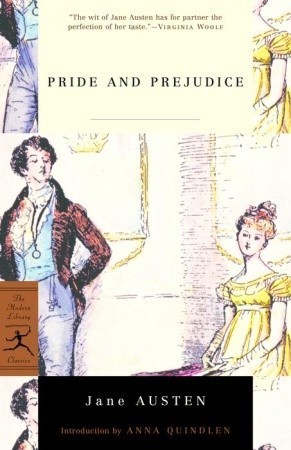
Pride and Prejudice
Jane Austen
We may earn a commission on purchases — at no cost to you. As an Amazon Associate we earn from qualifying purchases. Disclosure.
Pride and Prejudice is Jane Austen's comedy of manners about Elizabeth Bennet, the second of five sisters in a family whose estate will pass to a male cousin, and her combative courtship with the wealthy, aloof Mr Darcy. Austen uses the marriage market of the English landed gentry to examine how first impressions, class pride and social prejudice distort judgement, and how two intelligent people have to be humbled before they can see each other clearly. It endures because its central couple argue their way to love, and because Austen's irony makes a story about who marries whom into a study of how people actually think.
- 1The Bennet estate is entailed to a male heir, Mr Collins, so the five daughters must marry well or face poverty when their father dies.
- 2Elizabeth rejects Darcy's first proposal furiously, having been told he separated her sister Jane from Mr Bingley and having believed Wickham's lies about him.
- 3Darcy's letter after that rejection corrects the record: Wickham is a fortune-hunter who tried to elope with Darcy's fifteen-year-old sister.
- 4Elizabeth's youngest sister Lydia runs off with Wickham, threatening to ruin the whole family's reputation, and Darcy secretly pays to force the marriage.
- 5Lady Catherine de Bourgh, Darcy's imperious aunt, tries to forbid the match and accidentally convinces Darcy that Elizabeth might accept him after all.
- 6The novel resolves in two marriages, Jane to Bingley and Elizabeth to Darcy, each achieved only after both proud parties have been forced to reassess themselves.
Key ideas
Both titles apply to both leads
The pride and the prejudice are not neatly divided between Darcy and Elizabeth. Darcy's class pride blinds him, but so does Elizabeth's pride in her own perceptiveness, which is precisely what Wickham exploits. Each has to recognise the fault they were sure belonged only to the other.
Marriage as economics, not sentiment
Austen is unsentimental about why people marry. Charlotte Lucas, clear-eyed and nearly thirty, accepts the ridiculous Mr Collins because it secures her a home, and tells Elizabeth she asks little of marriage. The entail hanging over the Bennet women means their charm is also their livelihood, which gives the courtship plot real stakes.
Wickham and the danger of a pleasant manner
George Wickham is charming, plausible and entirely dishonest, and Elizabeth, who prides herself on reading people, is completely taken in. Austen's point is that a good first impression is evidence of nothing. His attempted seduction of Georgiana Darcy and his elopement with Lydia show what the charm was always covering.
The letter as the turning point
Darcy's written defence after his rejected proposal is the hinge of the book. Elizabeth reads it repeatedly, and the slow, painful revision of everything she thought she knew is Austen's finest piece of psychological writing. It is the moment prejudice gives way to evidence.
Comic monsters who reveal the system
Mr Collins's grovelling, Mrs Bennet's nerves, and Lady Catherine's naked snobbery are comedy, but each exposes how the marriage market really worked. Lady Catherine's attempt to bully Elizabeth into renouncing Darcy is both hilarious and a genuine display of class power, and it backfires completely.
Darcy's redemption through action
Darcy does not win Elizabeth with words. He quietly finds Lydia, pays Wickham's debts, and buys him a commission, saving the Bennets from ruin while asking for no credit. When Elizabeth learns of it by accident, she understands that his character has been steady all along and it was her reading of it that was wrong.
Elizabeth as a new kind of heroine
Elizabeth is valued for wit and judgement rather than beauty or fortune, refuses two secure proposals on principle, and speaks to her social superiors as an equal. Austen makes her the moral centre of the book precisely because she thinks for herself, even when, over Wickham, she thinks wrongly.
Notable quotes
“It is a truth universally acknowledged, that a single man in possession of a good fortune, must be in want of a wife.”
— opening line
Who is it for?
Readers who want one of the sharpest, funniest novels in English, endlessly quotable and surprisingly modern, should not be put off by its age. It rewards anyone interested in how wit, class and money shape romance, and it is the definitive comfort read for many. Newcomers to Austen and longtime admirers alike find something new on each reread.
Full summary
The Bennet family of Longbourn in Hertfordshire has five unmarried daughters and an estate entailed away to a distant male cousin. Mrs Bennet's entire purpose is to marry the girls off; Mr Bennet retreats into his library and dry irony. The arrival of the wealthy Mr Bingley nearby sets her scheming.
Bingley is drawn to the eldest, gentle Jane. His friend Mr Darcy, richer and prouder, offends the room by declaring Elizabeth merely tolerable. Elizabeth, quick and observant, files him away as arrogant, and their subsequent encounters become a series of verbal duels she believes she is winning.
The militia arrives, and with it the charming George Wickham, who tells Elizabeth that Darcy cheated him of an inheritance their fathers intended. She believes him instantly, which hardens her dislike of Darcy into something like contempt.
The odious Mr Collins, heir to Longbourn, proposes to Elizabeth and is refused, then marries her pragmatic friend Charlotte Lucas within days. Visiting the couple, Elizabeth encounters Darcy again at the home of his aunt, Lady Catherine, and he astonishes her with a proposal that is half insult, dwelling on how far beneath him she is.
She refuses him with real anger, accusing him of ruining Jane's happiness and wronging Wickham. Darcy responds with a letter: he admits separating Bingley from Jane but explains Wickham is a liar who squandered his inheritance and tried to elope with Darcy's teenage sister for her fortune. Elizabeth is forced to revise everything.
Touring Derbyshire, Elizabeth visits Darcy's estate, Pemberley, believing him away, and is struck by how his servants love him and how gracious he is when he unexpectedly appears. Their reacquaintance is warm and tentative, and she realises her feelings have changed.
News breaks that Lydia has run away with Wickham, unmarried, which threatens to disgrace all the sisters. Darcy tracks the couple down, pays Wickham's debts and bribes him to marry Lydia, telling no one. Elizabeth learns of it only through her aunt's indiscretion.
Lady Catherine descends on Longbourn to demand Elizabeth promise never to marry Darcy, and Elizabeth refuses to be bullied. Her defiance, reported back, gives Darcy hope. He proposes again, humbled and sincere, and is accepted. Jane and Bingley are reunited, and the two eldest Bennet sisters marry the men they love.