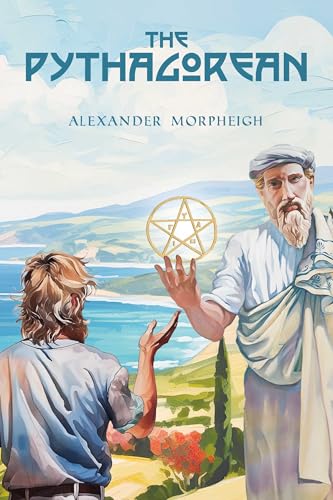
The Pythagorean
Alexander Morpheigh
We may earn a commission on purchases — at no cost to you. As an Amazon Associate we earn from qualifying purchases. Disclosure.
The Pythagorean is Alexander Morpheigh's philosophical fiction exploring themes of mathematics, spirituality and connection. The novel blends contemporary narrative with philosophical inquiry.
- 1The protagonist is connected to mathematics and philosophical inquiry.
- 2The novel explores connections between mathematics, spirituality and human meaning.
- 3Philosophical questions drive the narrative and the character's development.
- 4The novel blends contemporary story with deeper philosophical exploration.
- 5Relationships and connection are explored through mathematical and spiritual lenses.
- 6The novel questions what makes life meaningful.
Key ideas
Mathematics and meaning
Morpheigh explores how mathematical principles relate to meaning and connection.
Spirituality and science
The novel bridges spiritual and scientific ways of understanding the world.
Connection and pattern
The novel explores how connection and pattern create meaning.
Personal transformation
The protagonist is transformed through philosophical and spiritual inquiry.
The limits of rational thought
The novel questions whether rational thought can capture all meaning.
Beauty and truth
The novel explores the relationship between beauty and truth.
Who is it for?
Readers interested in philosophical fiction will find this engaging. It suits anyone interested in mathematics, spirituality and the search for meaning.
Full summary
The protagonist is drawn into philosophical inquiry through mathematics.
The novel explores connections between mathematical principles and human meaning.
The protagonist meets others who share philosophical and spiritual interests.
Through conversation and reflection, deeper understanding emerges.
The novel traces the protagonist's spiritual and intellectual development.
Questions about meaning, connection and truth drive the narrative.
The protagonist experiences moments of insight and transformation.
Morpheigh concludes with openness toward ongoing philosophical inquiry.