The Namesake
Jhumpa Lahiri
We may earn a commission on purchases — at no cost to you. As an Amazon Associate we earn from qualifying purchases. Disclosure.
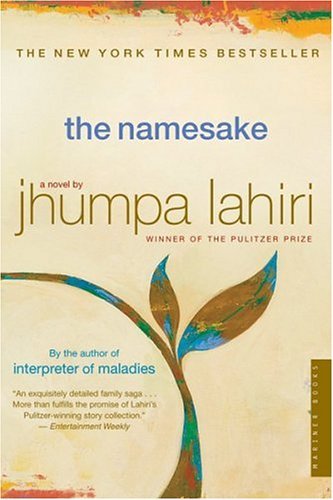
The Namesake is Jhumpa Lahiri's debut novel about Gogol Ganguli, an Indian-American man who grows up struggling with his unusual name and his hybrid identity, caught between his parents' Bengali culture and American society. The novel traces Gogol's life from childhood through adulthood as he navigates relationships, identity and his complex relationship with his family and cultural heritage.
- 1Gogol's name comes from Russian writer Nikolai Gogol, chosen by his father before Gogol was born as a reference to the author's spiritual significance to him.
- 2Gogol is born in America but grows up in a Bengali household, creating tension between his family's cultural identity and his American peers' expectations.
- 3Gogol struggles with his name throughout his childhood and adolescence, eventually having his name officially changed to Nikhil as a young adult.
- 4The novel traces Gogol's relationships, including a significant romantic relationship that is complicated by his identity and his family's expectations.
- 5Gogol's relationship with his father is central to the novel, and his father's death marks a turning point in Gogol's understanding of himself.
- 6The novel explores what it means to belong to a culture and a family while also trying to create an independent identity.
Key ideas
Identity and belonging
Gogol struggles throughout the novel to determine who he is and where he belongs, caught between two cultures and two names.
The immigrant experience
Through Gogol's parents' story and Gogol's own experience, Lahiri explores the immigrant experience and the sacrifices it requires.
Names and identity
The novel treats the name as more than just a label; it is tied to identity, culture and family. Gogol's struggle with his name represents his struggle with his identity.
Family obligation versus individual desire
Gogol must navigate the tension between what his family expects and what he wants for himself.
The loss of home
For Gogol's parents, home is Bengal, but America is where they must live. For Gogol, neither fully feels like home.
Grief and growth
Gogol's father's death is transformative, leading Gogol to reconsider his identity and his relationship to his family and his culture.
Who is it for?
Readers interested in immigrant narratives or in explorations of identity will find this moving and beautifully written. It suits anyone interested in Indian-American literature or in coming-of-age stories set against cultural complexity. Lahiri's prose is precise and emotionally resonant.
Full summary
Gogol Ganguli is born in America to Bengali immigrant parents. His father names him Gogol after Russian writer Nikolai Gogol, a writer of profound spiritual significance to him.
Gogol grows up caught between his parents' Bengali culture and American society. He attends American schools, makes American friends and feels increasingly distant from his family's cultural practices.
Throughout his childhood and adolescence, Gogol is deeply self-conscious about his unusual name. He feels that the name marks him as foreign and different from his peers.
As a young adult, Gogol officially changes his name to Nikhil, attempting to shed the identity imposed by his father and to create a more conventional American identity.
The novel traces Gogol's romantic relationships and his career as an architect, showing how his identity struggles extend into his personal and professional life.
Gogol's relationship with his father is complicated by his desire to distance himself from Bengali culture and by his shame at his father's accent and different ways.
When his father dies, Gogol experiences a profound grief that leads him to reconsider his identity and his relationship to his family and his cultural heritage.
The novel ends with Gogol reading a book by Gogol (the Russian author), a gesture suggesting that he has come to understand and accept the name and the identity his father gave him.