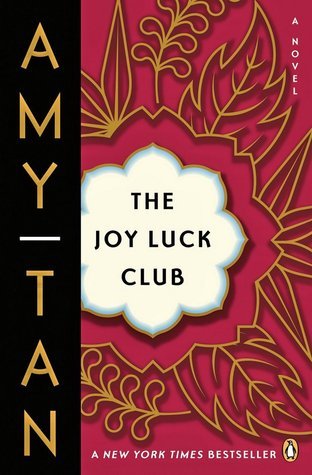
The Joy Luck Club
Amy Tan
We may earn a commission on purchases — at no cost to you. As an Amazon Associate we earn from qualifying purchases. Disclosure.
The Joy Luck Club is Amy Tan's debut novel that interweaves the lives and stories of four Chinese immigrant mothers and their American-born daughters, divided into four parts, each narrated alternately from the mothers' and daughters' perspectives. Through tales of arranged marriages, escape from war, and the tensions between keeping and shedding Chinese identity, Tan explores the profound gap between generations and the fierce love that bridges it. It is a novel about belonging, tradition, and how mothers and daughters speak across the chasm of their different worlds.
- 1Four Chinese mothers fled China during World War II and found each other in San Francisco, forming a club to share joy, or luck, at mahjong.
- 2Each mother had a daughter raised in America, and the novel alternates between the mothers' stories and their daughters' contemporary struggles.
- 3Jing-mei Woo, one of the daughters, is asked to take her mother's place at the mahjong table and meet her half-sisters in Shanghai.
- 4The daughters struggle to understand their mothers' pasts and to reconcile their Chinese heritage with their American identity.
- 5Tan uses the daughters' inability to truly hear their mothers as the novel's central tension, and the mothers' immigration as the key to understanding it.
- 6The novel closes with Jing-mei meeting her half-sisters in China, a symbolic return and a bridging of the divide.
Key ideas
The immigrant mother's sacrifice
Each of the four mothers has sacrificed enormously to give her daughter a better life in America, yet the daughters, shaped by American individualism, often misunderstand or resent their mothers' expectations and values. Tan is sympathetic to both: the mothers' need to transmit culture and the daughters' need to forge their own paths.
The untranslatable gap
Much of the novel's power comes from the daughters' inability to fully understand their mothers' Chinese pasts or to speak in a language that carries the mothers' meanings. The immigrants' English is imperfect, their stories fragmented by trauma and dislocation, and their daughters can only ever hear part of what they are trying to say.
The mahjong game as metaphor
The Joy Luck Club itself, formed around mahjong, is a space where the mothers share stories and seek luck and happiness. The game is a way of being together, of creating community among women who have endured loss and separation, and later becomes the ritual through which the daughters inherit their mothers' legacy.
Chinese identity as inheritance and rejection
The daughters grew up American, some speaking little or no Chinese, shaped by their peers and their schools rather than by their mothers' traditions. Yet they discover that they carry their mothers' stories in their bones and blood, whether or not they have chosen to claim them. Chinese identity is something they inherit whether they want it or not.
Mothers and daughters as mirrors
As the novel progresses, each daughter recognises herself in her mother, and each mother sees her daughter's struggles reflected in her own. The generational divide is also a mirror, and recognition begins when daughters stop seeing their mothers as foreign and start seeing themselves.
Storytelling as survival and connection
The novel is built on stories, each mother's and each daughter's narrative offering a piece of truth. Tan suggests that storytelling is how we survive trauma and how we pass meaning down through generations. The stories that seem irrelevant to American daughters carry the weight of their mothers' survival.
Who is it for?
Readers who love multigenerational family sagas and stories centred on mothers and daughters will find this deeply moving and culturally rich. It suits anyone interested in immigrant experiences, the Chinese-American identity, or the challenges of intergenerational communication. Readers of The Boatman's Daughter or The Book of Lost Things will appreciate the narrative layering.
Full summary
The Joy Luck Club begins with Jing-mei Woo, a thirty-six-year-old woman, learning that her mother has died and that she is now expected to take her mother's place in the mahjong group her mother founded with three other Chinese immigrant women fifty years earlier.
Jing-mei, who barely spoke Chinese and knew little of her mother's life in China, is sent to Shanghai to meet her half-sisters, giving the novel its emotional plot engine: a journey of discovery and reconnection with a past she has largely rejected.
The narrative then unfolds through the voices of the four mothers and four daughters, each set of chapters offering pieces of a larger puzzle. The mothers tell stories of their lives in China, of the wars, the losses, the marriages arranged and enforced and transcended.
Suyuan Woo, Jing-mei's mother, tells of leaving her twin daughters on a road during the Japanese occupation, a loss she carries for fifty years. Lindo Jong recalls being forced into a marriage she escaped through cunning. An-mei Hsu speaks of her mother's sacrifice and her own determination not to repeat it. Ying-ying St. Clair remembers a life of quiet suffering and the slow loss of her voice.
The daughters, growing up American and often ashamed of their mothers' accents and ways, narrate their contemporary struggles: Waverly's competitive childhood as a chess prodigy, June's sense of never being quite good enough, Rose's difficulty making decisions and asserting herself, Lena's resentment of inequality in her marriage.
Gradually, through the novel, the daughters begin to understand that their mothers' stories are not irrelevant old-world tales but keys to understanding themselves. The traits they have resisted as Chinese, the expectations they have rebelled against, are inheritances they carry whether or not they have claimed them.
Lindo begins to teach Waverly to play mahjong, and the game becomes a way of transmitting something wordless but essential. The mothers watch their daughters with a love that spans the gulf of different languages and different American dreams.
The novel closes with Jing-mei in Shanghai, meeting her half-sisters for the first time, seeing her mother's face in theirs, and feeling the weight and joy of connection across generations and oceans. The mahjong table, the mothers' legacy, is passed to the daughters, and though they may speak different languages, they are bound by stories and by blood.