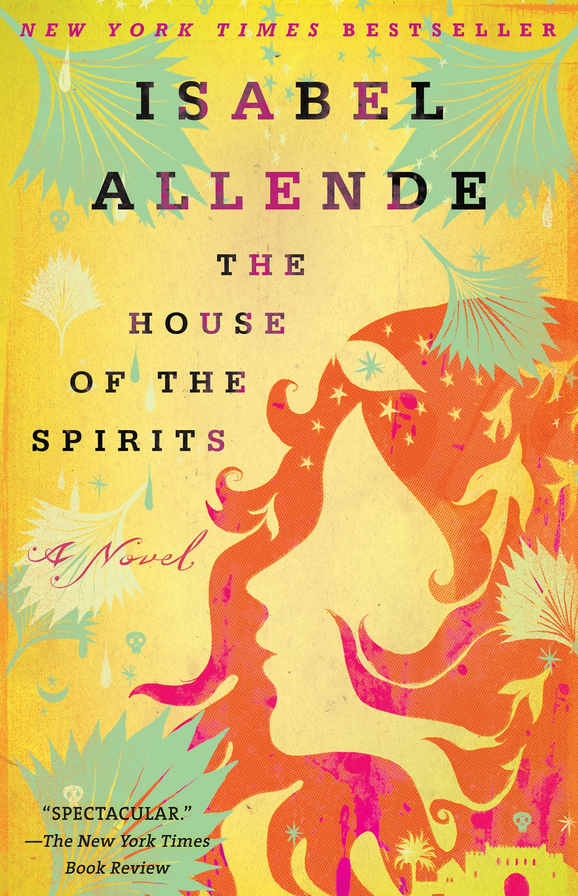
The House of the Spirits
Isabel Allende
We may earn a commission on purchases — at no cost to you. As an Amazon Associate we earn from qualifying purchases. Disclosure.
The House of the Spirits is Isabel Allende's magical realism epic spanning generations of a family navigating political upheaval and personal transformation in South America.
- 1The novel spans generations of a family from the early 1900s onward.
- 2Magical realism is woven throughout, with magical elements treated as normal.
- 3The Trueba family faces political upheaval and social transformation.
- 4Women in the family possess supernatural abilities and wisdom.
- 5Love, betrayal and family bonds are central to the narrative.
- 6The novel portrays how political events affect personal lives.
Key ideas
Magical realism
Allende weaves magical elements seamlessly into realistic narrative.
Generational epic
The novel traces how choices and trauma echo across generations.
Political and personal
Political events and personal relationships are intertwined.
Female power and wisdom
Women possess spiritual and emotional power that guides the family.
Memory and history
Personal memory is explored as a form of history.
Transformation through love
Love in its various forms transforms characters and situations.
Who is it for?
Readers interested in magical realism and multi-generational epics will find this enchanting. It suits anyone interested in Latin American literature and in how personal and political are intertwined.
Full summary
The novel follows the Trueba family across generations beginning in the early 1900s.
Clara possesses supernatural abilities including clairvoyance and communicating with spirits.
The family navigates love, betrayal and political upheaval in South America.
Esteban, the patriarch, is driven by passion and ambition.
Clara's children and grandchildren continue to be shaped by her spiritual power.
Political revolution affects the family, forcing transformation and growth.
The novel traces how trauma, love and secrets ripple through generations.
Allende ends with hope and transformation emerging from darkness.