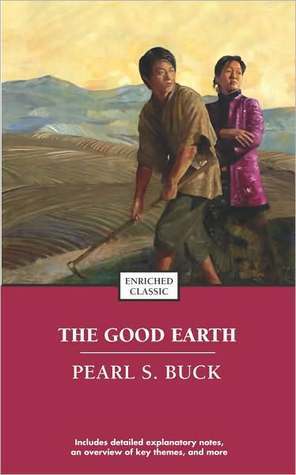
The Good Earth
Pearl S. Buck
We may earn a commission on purchases — at no cost to you. As an Amazon Associate we earn from qualifying purchases. Disclosure.
The Good Earth is Pearl S. Buck's masterpiece set in rural China, following Wang Lung from poverty to wealth and examining how his relationship to land, family and morality changes as his circumstances transform. Buck portrays the Chinese peasant with dignity and complexity, showing how a man's character is shaped by his relationship to the earth and how moral decline can accompany material success.
- 1Wang Lung is a poor peasant who buys a small plot of land and begins farming with his wife O-Lan.
- 2Through hard work and good harvests, Wang Lung gradually accumulates more land and builds wealth.
- 3O-Lan, his wife, is a hardworking and stoic woman who bears his children and supports his ambitions.
- 4As Wang Lung becomes wealthier, his relationship to the land changes from necessity to possession, and his moral character begins to shift.
- 5Wang Lung's family grows and becomes more comfortable, but comfort brings its own problems and temptations.
- 6The novel portrays the cycle of wealth and poverty and explores whether moral character can survive prosperity.
Key ideas
The relationship to land
Buck treats land as sacred and as the source of meaning and identity. When Wang Lung's relationship to land changes from necessity to possession, his character deteriorates.
The corrupting influence of wealth
Buck explores how prosperity can erode moral character and how a man who is virtuous in poverty may become dissipated and weak in wealth.
The strength of peasants
Buck portrays peasants with dignity and complexity, showing how the rural poor possess wisdom and strength that the wealthy have lost.
Women and survival
O-Lan and other women in the novel are portrayed as practical and morally grounded, the backbone of family survival.
Cycles of fortune
The novel portrays life as cyclical: seasons change, fortunes rise and fall, and all things are subject to time and chance.
The cost of ambition
Wang Lung's ambition to build wealth and status comes at a cost to his relationships and his character.
Who is it for?
Readers interested in world literature and Asian perspectives will find this essential and moving. It suits anyone interested in how historical change affects individuals and communities, or in explorations of poverty, wealth and character. Buck's portrayal of Chinese peasant life was groundbreaking for Western audiences.
Full summary
Wang Lung is a poor peasant in rural China, farming a small plot of rented land. His life is one of back-breaking labour and poverty.
He marries O-Lan, a former servant bought to be his wife. She is hardworking, patient and stoic, devoted to making the family survive.
Through good harvests and Wang Lung's hard work, the family gradually becomes more prosperous. They save money and buy more land.
Wang Lung builds wealth through decades of labour, eventually owning substantial land and becoming a landlord rather than a peasant farmer.
As his wealth grows, Wang Lung's character changes. He becomes drawn to luxury and excess, takes concubines and neglects O-Lan.
O-Lan bears him many children and supports his success, though she is increasingly sidelined as he becomes wealthier and more ambitious.
The novel portrays the transformation of Wang Lung's family and community as wealth brings both opportunity and moral compromise.
Buck's novel ends with Wang Lung old and wealthy, reflecting on his life and recognizing that something essential has been lost in his acquisition of wealth and status.