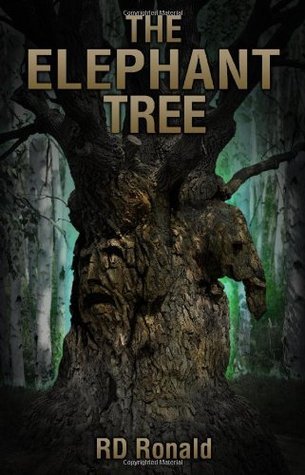
The Elephant Tree
R.D. Ronald
We may earn a commission on purchases — at no cost to you. As an Amazon Associate we earn from qualifying purchases. Disclosure.
The Elephant Tree is R.D. Ronald's debut novel, a dark crime thriller set in a Nigerian village where a British colonial officer and a local strongman collide over resources, power and a brutal act of violence. Ronald wrote it while imprisoned in the UK, drawing on his years in business and crime to craft a story of moral ambiguity and survival in a place where law is corrupt and brutal. It is a lean, muscular novel about men with no good choices and the terrible costs of colonial greed.
- 1The novel is set in a remote Nigerian village and concerns a conflict between colonial systems and local power.
- 2The elephant tree itself is a sacred, ancient landmark in the village that becomes central to the clash of wills.
- 3R.D. Ronald wrote the novel largely while imprisoned in the UK after being convicted of running a cannabis farm.
- 4The story explores moral ambiguity and the brutality lurking beneath systems of power, both colonial and local.
- 5The prose is spare and direct, mirroring the harsh landscape and the men's stoic endurance.
- 6It is Ronald's debut, published in 2010, and established the dark, transgressive crime voice he continued in The Zombie Room.
Key ideas
Colonial power and local violence
The Elephant Tree is set in a world where British colonial authority and local strongmen compete for dominance. Ronald treats colonialism not as backdrop but as engine: the exploitation and corruption it brings collide with existing power structures to create the conditions for violence.
Moral ambiguity and survival
No character in the novel is simply good or simply bad. Men survive by making terrible compromises, and Ronald refuses easy judgement. The story is interested in what people do when their circumstances offer no good choices, only varying degrees of wrong.
The sacred and the stolen
The elephant tree is sacred to the village, a living thing with centuries of history, and the story pivots on whether it will be destroyed for profit. Ronald uses it as a symbol of what is lost when greed and power override reverence and tradition.
Prison as crucible
Ronald wrote the novel while serving time, and the experience infuses it with authenticity about confinement, powerlessness, and the thinking that isolation forces. He transforms the experience into fiction that sits among his most acclaimed work.
Economy of language
The prose is deliberately spare and muscular, without ornament. Ronald's style mirrors the landscape he describes and the men who inhabit it: harsh, direct, unforgiving. The tightness makes the violence and emotion land harder.
The beginning of a voice
Though less widely known than The Zombie Room, The Elephant Tree established Ronald's signature: transgressive crime fiction, morally complex men, and a refusal to sentimentalise either violence or the conditions that breed it. It presaged his later work.
Who is it for?
Readers who appreciate lean, intense crime fiction and are curious about Ronald's voice before it evolved into The Zombie Room will find this a powerful introduction. It suits fans of African literature, colonial histories told through crime, and writers who emerged from prison to document their experience. Readers who valued Ben Okri or Chimamanda Ngozi Adichie will respect the unflinching gaze.
Full summary
The Elephant Tree is set in a small, remote village in Nigeria, where colonial systems and local power structures collide in a clash over resources and dominance. Ronald establishes the landscape and the men who inhabit it with sparse, direct prose.
At the centre of the conflict is the elephant tree itself, an ancient, sacred landmark in the village, a living thing with centuries of history and spiritual significance to the people. The tree is both literally what is at stake and symbolically what colonialism destroys.
A British colonial officer and a local strongman represent opposing powers, and their struggle over the tree and the village's resources drives the narrative. Neither man is presented as simply right or wrong; both are products of systems that corrupt and reduce.
The violence that erupts is brutal and consequential, and Ronald does not retreat from its depiction. The terrible act at the story's centre reverberates through the lives of all who witness or are caught in its wake.
Men in the village must navigate impossible choices: comply with corrupt colonial authority, submit to local strongmen, or resist at great personal cost. Ronald is interested in survival under systems where no choice is truly good.
Ronald's sparse prose style mirrors the harshness of both the landscape and the moral terrain. There is no ornament, no sentimentality, only the bare truth of what men do when cornered and what they lose in the process.
The novel unfolds as a tragedy in which tradition and the sacred are overwhelmed by greed and colonial extraction, leaving those who loved the land diminished and changed. The elephant tree, whether it stands or falls, becomes the measure of what has been won and lost.
Ronald wrote much of the novel while imprisoned in the UK, and that experience of confinement and powerlessness infuses the work with an authenticity about what it means to be trapped by circumstance and unable to change one's fate. It is the foundation of his voice as a crime novelist.