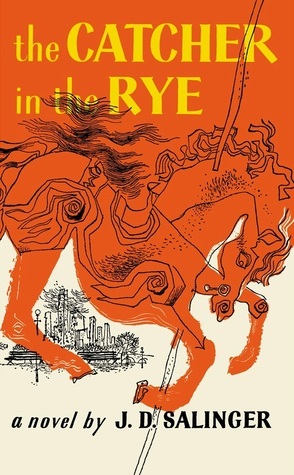
The Catcher in the Rye
J.D. Salinger
We may earn a commission on purchases — at no cost to you. As an Amazon Associate we earn from qualifying purchases. Disclosure.
The Catcher in the Rye is J.D. Salinger's landmark novel narrated by Holden Caulfield, a sixteen-year-old who, after being expelled from yet another prep school, spends a few aimless, anguished days wandering New York City before going home. In Holden's restless, slangy voice, Salinger captured adolescent alienation, grief and the horror of a world he sees as irredeemably phony. It became the defining novel of teenage disaffection, a portrait of a boy desperate to protect innocence in a way he cannot articulate.
- 1Holden Caulfield narrates the novel in retrospect, apparently from some kind of institution, recounting the days after his expulsion from Pencey Prep.
- 2Rather than go straight home to his parents in Manhattan, Holden checks into a hotel and drifts through the city for several days.
- 3Holden is preoccupied with phoniness, his word for the hypocrisy and superficiality he sees in almost everyone around him.
- 4The death of his younger brother Allie from leukaemia haunts Holden and underlies much of his grief and instability.
- 5His younger sister Phoebe is the one person he truly loves and trusts, and she becomes his emotional anchor.
- 6The title comes from Holden's fantasy of being the catcher in the rye, standing at a cliff's edge to catch children before they fall, an image of preserving innocence.
Key ideas
Adolescent alienation
Holden is the archetype of the alienated teenager, disgusted by the adult world and unable to connect with it. His narration, wandering, digressive and full of contradiction, captures the loneliness and confusion of adolescence with unusual immediacy. The novel gave voice to a feeling of not belonging that generations of young readers recognised as their own.
The obsession with phoniness
Holden's central complaint is phoniness, the hypocrisy, pretension and performance he detects everywhere, from old boys at his school to actors to acquaintances. His scorn is a defence against a world he finds painful, and part of the novel's poignancy is that Holden is often phony himself, lying compulsively even as he condemns it in others.
Grief beneath the anger
Much of Holden's turmoil traces back to the death of his brother Allie, whose baseball glove covered in poems he still keeps and whom he addresses in moments of despair. Salinger suggests that Holden's alienation is grief he cannot process, and that his breakdown is as much about unmourned loss as teenage rebellion.
The impulse to protect innocence
The title fantasy, misremembered from a Robert Burns poem, has Holden imagining himself catching children before they fall off a cliff in a field of rye. It expresses his deepest wish: to shield childhood innocence from the corruption of adulthood. His attempt to rub out an obscenity scrawled where children will see it is the same impulse in miniature.
Phoebe as the moral centre
Holden's ten-year-old sister Phoebe is the one genuine, unphony person in his world. Her clear-eyed challenge, asking him to name one thing he actually likes, cuts through his defences, and her insistence on running away with him forces him to stay. The scene of Phoebe on the carousel is the novel's emotional resolution.
A voice that changed fiction
Salinger's achievement is Holden's voice: colloquial, immediate, funny and raw, addressing the reader directly. That first-person intimacy made the novel feel startlingly real and hugely influential, shaping countless later coming-of-age narratives. The style is inseparable from the character's psychology.
Who is it for?
Readers who want the defining novel of teenage alienation, told in one of the most distinctive voices in American fiction, will find it as raw and immediate as its reputation suggests. It resonates especially with adolescents and with adults revisiting that turbulence, and it rewards discussion of grief, innocence and identity. Readers of The Bell Jar or The Perks of Being a Wallflower will recognise its lineage.
Full summary
Holden Caulfield, sixteen, narrates from the vantage of some months later, apparently while recovering in a care facility in California. He begins his account at Pencey Prep, the latest boarding school to expel him, this time for failing most of his subjects, just before the Christmas holidays.
After a fight with his roommate Stradlater over a girl Holden cares about, and feeling disgusted with the school and everyone in it, Holden decides to leave Pencey early. Rather than face his parents before the holidays officially begin, he takes a train to Manhattan and checks into a shabby hotel.
Over the following days Holden drifts through the city, encountering a stream of people, cab drivers, old girlfriends, nuns, a former teacher, who variously disappoint, unsettle or exhaust him. He is lonely, drinking, and increasingly unmoored, forever detecting the phoniness he despises and unable to find genuine connection.
A bruising encounter with a prostitute and her pimp, and a painful date with a girl named Sally Hayes, whom he impulsively invites to run away with him and then insults, deepen his sense of isolation. Holden's behaviour grows more erratic as his distress mounts.
Throughout, the memory of his dead brother Allie surfaces, revealing the grief beneath his cynicism. Holden recalls Allie's baseball glove and the night he died, and in his lowest moments he speaks to his lost brother, exposing how much unhealed pain drives his wandering.
Desperate to see someone real, Holden sneaks home to visit his younger sister Phoebe while their parents are out. Phoebe, sharp and loving, senses his trouble and challenges him to name a single thing he genuinely likes, and it is to her that he confesses his fantasy of being the catcher in the rye.
Holden visits a former teacher, Mr Antolini, but flees in the night after waking to a gesture he finds alarming, adding to his confusion. Exhausted and near collapse, he resolves to head west and disappear, and tells Phoebe of his plan when she meets him, only to find she has packed to come with him.
Unable to let Phoebe throw away her life, Holden abandons the plan and instead takes her to the zoo and the carousel. Watching her ride it in the rain, reaching for the gold ring, he is overcome with a happiness he cannot fully explain. He ends his account back home and unwell, unsure of the future but changed by the days he has described.