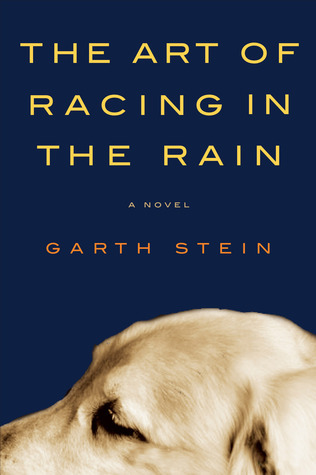
The Art of Racing in the Rain
Garth Stein
We may earn a commission on purchases — at no cost to you. As an Amazon Associate we earn from qualifying purchases. Disclosure.
The Art of Racing in the Rain is Garth Stein's novel told from the perspective of Enzo, a philosophical dog who shares his life with his owner Denny, a race car driver, and reflects on what it means to be alive, to love and to face death with courage. Through Enzo's eyes, the novel follows Denny's personal struggles, his marriage, his legal battles and ultimately his mortality, as Enzo learns and teaches the value of living fully despite impending loss.
- 1The novel is narrated by Enzo, a dog with a surprisingly philosophical consciousness who observes and reflects on the human dramas unfolding around him.
- 2Enzo's owner is Denny, a race car driver who loves his wife Eve, their daughter Zoe and his dog with fierce devotion.
- 3The family faces multiple crises: Eve's illness and death, a custody battle over Zoe, and Denny's financial struggles.
- 4Enzo, growing old and dying, reflects on the lessons he has learned from watching Denny and his family face their challenges.
- 5The novel is structured around the metaphor of racing, with life presented as a race that must be run with courage and presence.
- 6Enzo's love for Denny and his philosophy of how to live and die forms the emotional heart of the novel.
Key ideas
The philosophy of a dog
Stein uses Enzo's perspective to suggest that wisdom often comes from outside human consciousness. Enzo's observations are sometimes cynical but always shaped by loyalty and love.
Racing as metaphor for life
Denny's career as a race car driver becomes a metaphor for how to live: with focus, courage and acceptance of risk. The skills of racing are the skills of living.
Loyalty and love transcending species
Enzo's love for Denny is portrayed as profound and equal to human love. Stein treats the human-animal bond as worthy of serious emotional attention.
Facing death with dignity
The novel is partly about dying well. Both Eve and Enzo face death with grace, and the novel treats mortality as a fundamental part of living fully.
The limitations of human understanding
Through Enzo's perspective, Stein shows how much humans misunderstand about their own lives and about what matters. Enzo sees clearly what humans obscure.
Presence and acceptance
The novel's philosophy is that the present moment is all we have, and that acceptance of this fact is the path to peace and joy.
Who is it for?
Readers who love stories told from animal perspectives, or who are interested in literary explorations of mortality and meaning, will find this moving and thought-provoking. It suits anyone who has loved a dog or anyone interested in philosophical fiction. Readers should be prepared for emotional intensity, particularly around themes of death and loss.
Full summary
Enzo is an aging dog living with Denny, a race car driver, in Seattle. Enzo has lived his whole life with Denny and has developed a sophisticated understanding of human nature and the lessons of racing.
Through Enzo's narration, the novel traces the years of Denny's life: his marriage to Eve, the birth of their daughter Zoe, Denny's career as a race car driver and the family's love for each other.
Eve becomes ill with cancer and dies, a tragedy that devastates Denny and shakes his faith. Enzo watches as Denny grieves and struggles to maintain his life.
After Eve's death, Denny faces a custody battle over Zoe when Eve's parents attempt to take her away, arguing that Denny is unfit as a parent. The legal battle is brutal and threatens Denny's relationship with his daughter.
Through it all, Enzo remains loyal and observant, applying the philosophy of racing to Denny's life: approach each moment with focus, accept risk, and never give up.
As Enzo ages and approaches death, he reflects on the lessons he has learned from Denny and from his life. He understands that his purpose has been to love Denny and to teach him through loyal presence.
The novel explores the depth of the human-dog bond and treats it as a form of love and communication that transcends words.
The novel ends with Enzo dying, but not before he has passed on his philosophy to Denny and the reader, suggesting that how we face mortality defines who we are.