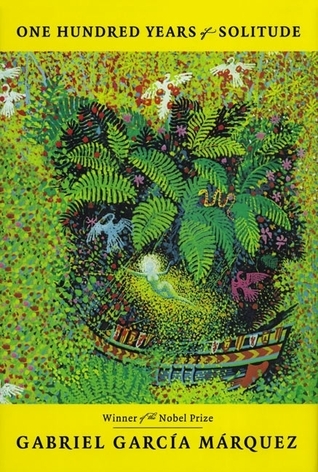
One Hundred Years of Solitude
Gabriel García Márquez
We may earn a commission on purchases — at no cost to you. As an Amazon Associate we earn from qualifying purchases. Disclosure.
One Hundred Years of Solitude is Gabriel García Márquez's magical realism masterpiece spanning generations of a family in Macondo, exploring time, love, memory and the cyclical nature of history.
- 1The novel spans multiple generations of the Buendía family.
- 2Magical realism is woven throughout, with magic treated as normal.
- 3The family repeats patterns across generations.
- 4Time is portrayed as cyclical rather than linear.
- 5The town of Macondo is isolated and mysterious.
- 6The novel explores themes of solitude and connection.
Key ideas
Magical realism
Márquez seamlessly integrates magical elements into reality.
Generational cycles
Patterns and choices repeat across generations.
Time and memory
Time is nonlinear; memory and history are complex.
Solitude and connection
The novel explores paradox of solitude within connection.
Town as character
Macondo is as much character as the family.
Love and loss
Love and its loss are central to the family saga.
Who is it for?
Readers interested in magical realism and literary classics will find this essential and beautiful. It suits anyone interested in exploring how literature captures human experience.
Full summary
The novel follows the Buendía family across multiple generations.
The family is founded in the isolated town of Macondo.
Magical elements are woven throughout their daily lives.
The family experiences love, war, magic and loss.
Names repeat across generations as if history cycles.
Time becomes confused as cycles repeat.
The novel traces how the family is shaped by its past.
Márquez ends with apocalyptic revelation and cyclical closure.