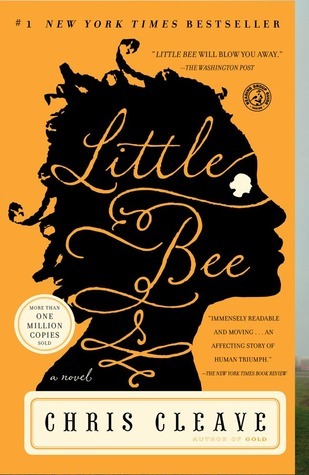
Little Bee
Chris Cleave
We may earn a commission on purchases — at no cost to you. As an Amazon Associate we earn from qualifying purchases. Disclosure.
Little Bee is Chris Cleave's novel about a young Nigerian refugee who arrives on a British beach and strikes up an unlikely friendship with a British woman named Sarah and her family. The novel gradually reveals the circumstances that brought Little Bee to Britain and the trauma they have both experienced, exploring themes of refugee experience, friendship across difference and the search for belonging.
- 1Little Bee is a young Nigerian girl who has survived refugee camps and escapes to find herself on a British beach.
- 2She meets Sarah, a British woman, and forms an unlikely friendship that gradually develops into something deeper.
- 3Sarah is managing her own trauma and her complicated family life, and her connection with Little Bee becomes transformative for both.
- 4The novel gradually reveals the events that led to Little Bee's flight from Nigeria and the role Sarah played in her survival.
- 5Little Bee must navigate the British immigration system and the hostility toward refugees while trying to build a safe life.
- 6The novel explores the deep connection that can form between people from vastly different circumstances.
Key ideas
The refugee experience
Cleave portrays the refugee experience with humanity and specificity, showing the complex circumstances that force people to flee their homes.
Friendship across difference
The friendship between Little Bee and Sarah transcends cultural, economic and experiential differences, suggesting that human connection can bridge vast divides.
Survival and trauma
Both Little Bee and Sarah have survived trauma, and their friendship is partly a mutual recognition of having endured what should have been unsurvivable.
Belonging and home
Both characters search for belonging and home, and the novel suggests that home is not always geographic but can be found in connection with others.
The impact of witness
Sarah's act of witnessing Little Bee's survival is portrayed as transformative for both, suggesting that witnessing another's humanity matters profoundly.
Naming and identity
Little Bee's choice of her own name is an act of agency and self-definition, a reclamation of identity after trauma has tried to erase it.
Who is it for?
Readers interested in stories of refugees and human connection will find this moving and powerful. It suits anyone interested in how friendship transcends boundaries and how people find strength in connection. The novel is emotionally intense but ultimately affirming.
Full summary
Little Bee is a young Nigerian refugee who arrives on a British beach after escaping circumstances of violence and displacement. She has survived what most would not.
She meets Sarah, a British woman who is on the beach for reasons of her own. Sarah is struggling with her marriage, her children and her own sense of purpose.
An unlikely friendship develops between the two women. Sarah offers Little Bee shelter and help navigating the British refugee system, while Little Bee offers Sarah something she desperately needs: a sense of purpose and connection.
Gradually, through their conversations and shared time, the true circumstances that brought them together are revealed. Sarah was present at a crucial moment in Little Bee's survival.
Little Bee shares her story: her escape from Nigeria, the violence she witnessed, the refugee camps where she was imprisoned, and the impossible circumstances that forced her to flee.
Sarah's own story unfolds: her dissatisfaction with her marriage, her disconnection from her children, and her sense that her life has become small and meaningless.
The two women's lives become deeply intertwined. Sarah's help allows Little Bee to begin building a life in Britain, while Little Bee's presence gives Sarah's life renewed meaning.
The novel ends with the two having found something precious in each other: a friendship that has transformed both their lives and given them reasons to hope.