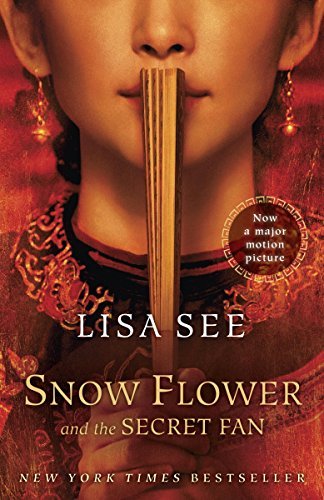
Snow Flower and the Secret Fan
Lisa See
We may earn a commission on purchases — at no cost to you. As an Amazon Associate we earn from qualifying purchases. Disclosure.
Snow Flower and the Secret Fan is a novel about the lifelong bond between two women in nineteenth-century rural China, told through the secret written language, nu shu, that women there used to communicate beyond the reach of men. Lisa See follows Lily and Snow Flower from childhood, through foot binding and arranged marriages, to a rupture caused by a misunderstanding, exploring a form of female friendship, laotong, that was as formally binding as marriage. It is a richly researched immersion in a hidden women's world, and a meditation on how easily even the deepest love can be broken by misread words.
- 1The novel is set in Hunan province in the nineteenth century and centres on nu shu, a secret script women used to write to one another.
- 2Lily and Snow Flower are paired as laotong, a formal lifelong bond between two girls, arranged like a marriage and considered even more emotionally significant.
- 3The girls undergo foot binding, a brutal, dangerous process the novel depicts in unflinching detail as the price of marriageability.
- 4Lily and Snow Flower communicate through nu shu written on a shared silk fan, passing messages across the years and their separate marriages.
- 5A misinterpreted message during a time of war and hardship causes a devastating rift between them, driven by Lily's wounded pride.
- 6The novel is narrated by an elderly Lily looking back with regret, having understood too late how she wronged her laotong.
Key ideas
Nu shu, a language for women
The book's foundation is the real, remarkable phenomenon of nu shu, a script developed and used only by women in one region of China, allowing them a private channel of expression in a society that denied them formal education and voice. See uses it as both plot device and symbol of a hidden female inner life. Messages on the shared fan carry the relationship across decades.
Laotong as a bond deeper than marriage
Lily and Snow Flower are joined as laotong, old sames, a formal, contractual, lifelong emotional partnership between two matched girls. See presents it as more intimate than the marriages the women are given to strangers, a chosen union of hearts in a world where almost nothing else about their lives is chosen.
The brutal reality of foot binding
The novel does not romanticise foot binding; it depicts the crushing and reshaping of young girls' feet in visceral, sometimes fatal detail, and the way mothers inflicted it out of love, knowing it was the only route to a good marriage. It stands as the book's central image of how women were made to suffer to have any value in that society.
A friendship broken by misreading
The tragedy turns on interpretation. During years of war and displacement, Lily reads a nu shu message from Snow Flower as a betrayal, when it was nothing of the kind, and reacts with a pride and cruelty she will regret for the rest of her life. See makes the fragility of communication, even in a language built for intimacy, the heart of the story.
Regret and the elderly narrator
The whole story is told by Lily as an old woman, which colours every event with hindsight and remorse. She understands, far too late, that her own hurt vanity destroyed the most important relationship of her life. The retrospective frame turns the novel into a confession and a plea for forgiveness.
A vanished women's world reconstructed
See draws on real historical research into nu shu and the customs of Hunan women to reconstruct a way of life almost entirely lost. The upstairs women's chambers, the rituals of marriage and mourning, and the secret writing together form a detailed portrait of a female culture that operated alongside and beneath the visible male one.
Who is it for?
Readers who love immersive historical fiction centred on women's lives and unfamiliar cultural worlds will find this absorbing and moving, and it is a rewarding book club choice for its themes of friendship and regret. It suits anyone curious about nu shu, foot binding, or the texture of nineteenth-century Chinese women's lives. Readers of Memoirs of a Geisha or Pachinko will feel the same pull.
Full summary
An elderly woman named Lily begins to recount her life in nineteenth-century Hunan province, promising to tell the truth about a friendship she cherished and betrayed. She was born into a modest farming family, her worth to be determined largely by her feet and her marriage prospects.
A matchmaker identifies Lily as a girl of unusual promise, in part because of the potential of her feet, and arranges for her to be paired as a laotong, a formal lifelong soulmate, with a girl named Snow Flower from a seemingly higher-status family. The two are matched as intimately as brides.
Together the girls endure foot binding, the agonising and perilous reshaping of their feet, which the novel renders in unsparing detail. They form a profound bond, exchanging messages in nu shu, the women's secret script, written on a silk fan that passes back and forth between them over the years.
As they grow, both are married off into separate households, Lily marrying up into a good family, and each enters the difficult life of a wife and daughter-in-law in a stranger's home. Their laotong bond sustains them through childbirth, loss and the constraints of their new lives, sustained by the fan and their coded letters.
Lily gradually discovers that Snow Flower's circumstances are not what she was led to believe, and that her friend has married into hardship far below Lily's own rising fortunes. The imbalance in their fates begins, subtly, to strain the equality their bond was built upon.
During a period of regional war and upheaval, the families flee into the mountains to survive, enduring cold, hunger and death. In the crucible of these events, and through the messages they exchange, tension and misunderstanding accumulate between the two women.
Lily interprets a nu shu message from Snow Flower as a betrayal of their bond, when in fact she has misread its meaning. Wounded and proud, she responds with coldness and public humiliation, severing the friendship at the very time Snow Flower most needs her, and the rift hardens over years.
Only near the end of Snow Flower's life does Lily learn how badly she misjudged the message and how cruelly she wronged the woman she loved most. The elderly Lily tells the story as an act of remorse, having spent her remaining years trying to atone and to preserve the memory of her laotong.