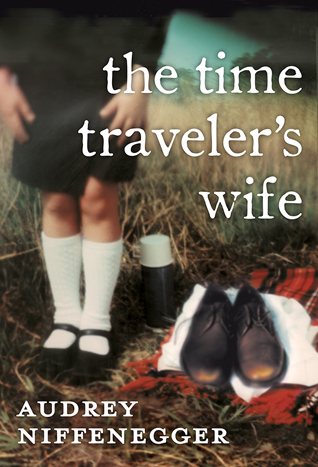
The Time Traveler's Wife
Audrey Niffenegger
We may earn a commission on purchases — at no cost to you. As an Amazon Associate we earn from qualifying purchases. Disclosure.
The Time Traveler's Wife is a love story between Henry DeTamble, a Chicago librarian with a genetic disorder that pulls him involuntarily through time, and Clare Abshire, the artist who has known him since she was six. Audrey Niffenegger uses the mechanics of time travel to make an ordinary marital problem literal: one partner is repeatedly absent, unreachable, and in danger, and the other is the one who waits. Its central question is whether a life can be freely chosen when both people already know how it ends.
- 1Henry has Chrono-Displacement Disorder, a genetic condition that throws him into other times without warning, always naked and with nothing he was carrying.
- 2Clare first meets Henry in a meadow behind her family's Michigan house when she is six and he is a thirty-six-year-old visitor from her future.
- 3Henry meets Clare for the first time in real time at the Newberry Library in Chicago when he is twenty-eight and she is twenty, and she knows everything about him while he knows nothing about her.
- 4Henry repeatedly returns to the car crash that killed his mother, the opera singer Annette Lyn Robinson, and watches it from the roadside without being able to intervene.
- 5Six miscarriages precede the birth of their daughter Alba, who inherits the condition but, unlike Henry, can choose her destinations.
- 6Henry's feet are amputated after he is stranded in freezing weather, and he dies at forty-three of a gunshot wound sustained during a time jump into a deer hunt in Clare's family's woods.
Key ideas
Time travel as a chronic illness
Niffenegger treats the condition as a medical problem rather than a superpower. Henry arrives naked and vulnerable, so he has learned to pick locks, shoplift, run and fight. Dr Kendrick, the geneticist who eventually identifies the gene in mice, gives the book the vocabulary of diagnosis, treatment and prognosis rather than adventure.
Two people meeting at different points in the same relationship
Every chapter is headed with both characters' ages, because they are almost never living the relationship in the same order. Clare spends her childhood with a man who already knows their marriage, and Henry spends his twenties catching up to a woman who has been waiting since she was six. The structure is the book's real invention.
The problem of consent inside a predetermined life
Clare has been in love with Henry since childhood because an older Henry, sent by their shared future, appeared in her meadow. Niffenegger does not smooth this over: Clare herself wonders whether she chose Henry or was assigned to him. Henry, for his part, is careful never to tell her anything about her future that she has not already told him.
The people left behind do the waiting
Clare's life is organised around a man who vanishes mid-sentence and reappears injured, and the novel is titled for her rather than for him. Her paper sculpture, made in a studio full of pulp and wire, is the one part of her life that belongs to her alone. Niffenegger's argument is that absence is a shared condition of most marriages and this one only makes it visible.
Grief that can be revisited but never changed
Henry's mother died in a car accident when he was six, and he returns to that stretch of road again and again across his life, sometimes as an adult watching himself as a child. He can attend her final performances, speak to her before she dies, and change absolutely nothing. It is the clearest statement of the book's rules: knowledge without power.
Alba and the version that works
Their daughter inherits the disorder but can navigate deliberately, visiting her father after his death and meeting her own future selves. Through Alba, Niffenegger offers a form of the same condition that is a gift rather than an affliction. She is also how Clare gets to keep a piece of Henry.
The long ending
Henry sees his own feet in a jar and knows what is coming, and the reader watches him spend his last years preparing his wife for it. He leaves Clare a letter telling her to live and not to wait. The final scene, in which an eighty-two-year-old Clare receives one last visit, makes clear that she waited anyway.
Notable quotes
“It's hard being left behind.”
— Clare, opening lines
Who is it for?
Readers who want an emotionally immersive love story with a genuinely clever structural conceit will find this hard to put down, and it works just as well for people who normally avoid science fiction as for those who seek it out. It rewards close attention: the chapter headings alone reward rereading once you know the ending. Anyone who loved One Day, The Night Circus or Life After Life will recognise the same pleasures.
Full summary
Clare Abshire is six years old, playing in the meadow behind her family's house in Michigan, when a naked adult man appears in the clearing and asks her for a blanket. He tells her his name is Henry, that he comes from the future, and that they will meet properly one day. He visits her throughout her childhood.
Henry DeTamble has Chrono-Displacement Disorder. He disappears without warning, arrives elsewhere in time with nothing, and returns just as abruptly. He grew up in Chicago with his father Richard, a violinist who drinks after the death of his wife Annette, an opera singer killed in a car accident that six-year-old Henry survived and has revisited ever since.
In 1991, at twenty-eight, Henry is working at the Newberry Library when a young woman he has never seen greets him by name. Clare is twenty and has been waiting for this day since she was six. He has to be told his own history by someone he has not yet met.
They marry when Clare is twenty-two. Henry vanishes shortly before the ceremony and an older version of himself, greying at the temples, arrives to stand in. Married life is punctuated by his disappearances: he returns bleeding, frostbitten or beaten, and Clare learns to live around the gaps.
Dr Kendrick, a geneticist, takes Henry's case and eventually locates the responsible gene, breeding mice that display the same behaviour. A drug is developed. It fails, and the failure removes the last hope that the condition can be managed.
Clare's pregnancies end in six miscarriages, because the foetus inherits the disorder and travels out of the womb. Henry has a vasectomy to end the cycle, and Clare conceives anyway, by sleeping with a version of Henry from before the operation. Their daughter Alba is born and can time travel with control.
Henry is stranded in sub-zero temperatures during a jump and his feet are amputated, which he already knew was coming because he had seen them preserved in a jar during an earlier visit to the future. Confined to a wheelchair and unable to run from anything he arrives in, he understands he does not have long.
He jumps into the woods behind Clare's family home during a deer hunt in winter and is shot by her brother's party. He returns to the present on New Year's Day and dies in her arms. Alba visits her father in the past for years afterwards. At eighty-two, Clare, who has never stopped waiting, sees him one final time.