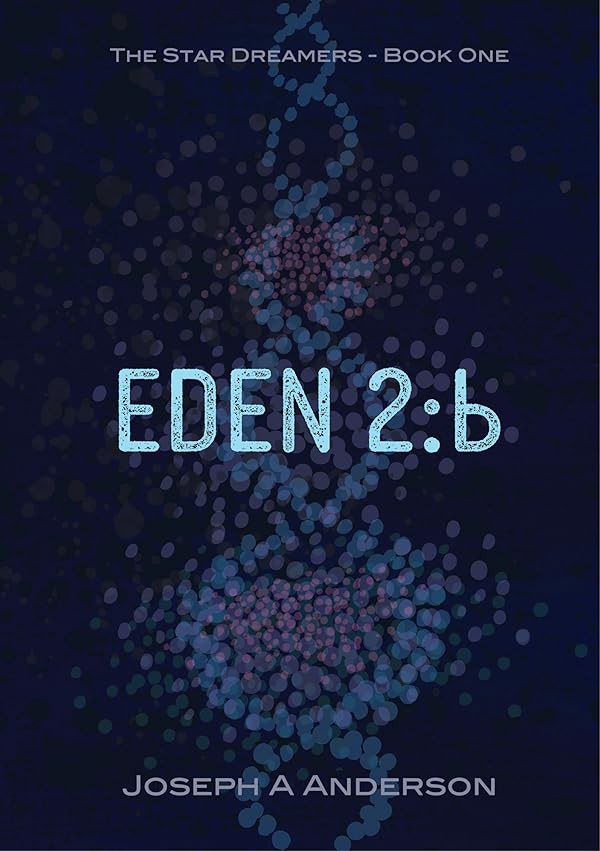
Eden 2:b
Joseph A. Anderson
We may earn a commission on purchases — at no cost to you. As an Amazon Associate we earn from qualifying purchases. Disclosure.
Eden 2:b is Joseph A. Anderson's science fiction novel set in a future where genetically modified humans called Eden children are created to be perfect and are kept isolated in a controlled environment. When the protagonist discovers the outside world beyond their isolated existence, they must confront the reality of their creation and their purpose.
- 1The Eden children are genetically perfect humans created in a lab and raised in isolation in a controlled environment.
- 2They are educated to believe they are the only survivors of an apocalypse and that the outside world is toxic.
- 3The protagonist begins to discover that the world beyond Eden is not as they have been told.
- 4The truth about their creation and their purpose begins to unravel their entire understanding of reality.
- 5The Eden children must decide whether to remain in their controlled paradise or to seek truth in the outside world.
- 6The novel explores questions of freedom, autonomy and the cost of perfect safety.
Key ideas
Genetic perfection as dystopia
Anderson explores how the pursuit of genetic perfection creates not utopia but a kind of prison that denies freedom and individuality.
Controlled environments and freedom
The safety of Eden comes at the cost of freedom and autonomy. Anderson questions whether this trade-off is acceptable.
The gap between truth and lie
The Eden children have been lied to about their world and must confront the gap between what they have been taught and reality.
The cost of paradise
Eden appears to be a paradise, but Anderson shows that perfection without freedom is actually a cage.
Identity and creation
The Eden children must confront the fact that they were created for a purpose and question who they truly are.
The choice to know
Knowing the truth about their world and their origins forces the Eden children to make impossible choices.
Who is it for?
Readers interested in science fiction that explores the ethics of genetic engineering and dystopian futures will find this engaging. It suits anyone interested in how controlled environments affect human development and freedom. The novel is thought-provoking and raises philosophical questions.
Full summary
The Eden children are genetically perfect humans created in a lab and raised in a controlled environment called Eden.
They are educated to believe that they are the only survivors of an apocalypse and that the world beyond Eden is toxic and uninhabitable.
They are perfectly healthy, perfectly educated and perfectly content in their isolated environment, with no knowledge of the outside world.
The protagonist begins to question the narrative they have been told and to suspect that there is more to the world than they have been taught.
The protagonist discovers evidence that contradicts the official story and learns that the outside world is not as toxic as they have been told.
The protagonist must decide whether to remain in the safety of Eden or to venture into the unknown outside world.
The truth about Eden's creation and purpose is gradually revealed, showing that the children were created for a specific reason.
The novel ends with the protagonist and other Eden children confronting the reality of their existence and making choices about their futures.