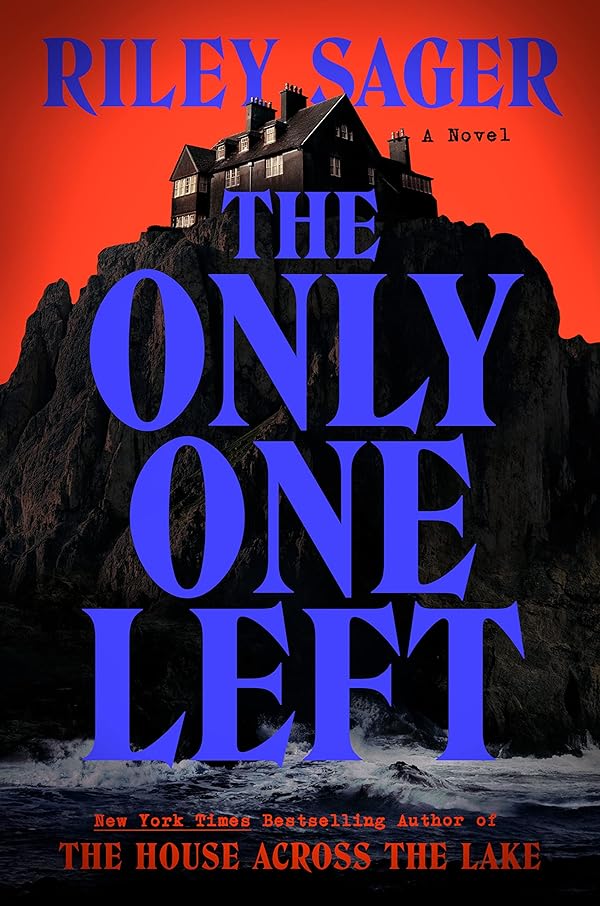
The Only One Left
Riley Sager
We may earn a commission on purchases — at no cost to you. As an Amazon Associate we earn from qualifying purchases. Disclosure.
Riley Sager's The Only One Left presents a gothic thriller about Lenora Merton, a woman living in a decaying Southern mansion who narrates her story to a psychologist, gradually revealing the trauma and mystery surrounding the house and its inhabitants. Structured as a psychological investigation into Lenora's past and the secrets of the house, the novel blends gothic atmosphere with psychological suspense.
- 1Lenora is a woman living in isolation in a decaying Southern mansion, slowly losing her grip on reality.
- 2She communicates with a psychologist, narrating her story and revealing her history with the house and its other inhabitants.
- 3The narrative gradually reveals that Lenora has experienced trauma and that the house holds dark secrets.
- 4A visitor arrives at the house, a stranger who begins to explore its mysteries and uncover its history.
- 5The novel plays with unreliable narration, leaving readers uncertain about what is real and what is Lenora's distorted perception.
- 6The ending reveals shocking truths about Lenora's identity and the nature of the house itself.
Key ideas
Isolation and mental degradation
Lenora's isolation in the house has affected her mental state. Sager explores how isolation can warp perception and memory.
Trauma and its aftermath
Lenora has experienced significant trauma, and the house becomes both refuge and prison, a place where she cannot escape her past.
The gothic mansion as character
The decaying Southern mansion is portrayed as a character itself, with its own history and secrets that parallel Lenora's psychological decay.
Unreliable memory and narration
Sager plays with how memory distorts and how Lenora's narration may not be entirely reliable, creating uncertainty about what really happened.
The uncanny and the psychological
Sager blurs the line between psychological horror and supernatural horror, leaving readers uncertain about the nature of the house's strangeness.
Secrets and their revelation
The novel's central suspense comes from gradually revealing the secrets of the house and of Lenora's identity.
Who is it for?
Readers who love gothic thrillers with psychological depth will find this engaging. It suits fans of modern gothic fiction and anyone interested in unreliable narrators. Readers should be prepared for atmosphere and psychological unease rather than traditional action-driven plotting.
Full summary
Lenora Merton lives alone in a decaying Southern mansion, largely cut off from the outside world. She narrates her story to a psychologist, gradually revealing her past.
The narrative alternates between Lenora's voice and the perspective of a visitor to the house, a stranger who arrives and begins to explore the mansion's mysteries.
Lenora reveals through her narration that she has experienced trauma and that the house holds dark secrets related to its inhabitants and to events from the past.
As the visitor explores the house, they uncover evidence of mysteries: hidden rooms, strange objects and hints of violence or tragedy.
Lenora's narration becomes increasingly unreliable, and readers are forced to question what is real and what is Lenora's distorted perception of events.
Sager gradually reveals the shocking truth about Lenora's identity and about what really happened in the house, forcing a complete reinterpretation of the narrative.
The novel builds toward a climax where the boundaries between past and present, sanity and madness, reality and distortion collapse.
Sager ends with a revelation that reframes everything readers thought they understood about Lenora, the house and the true nature of the mystery.