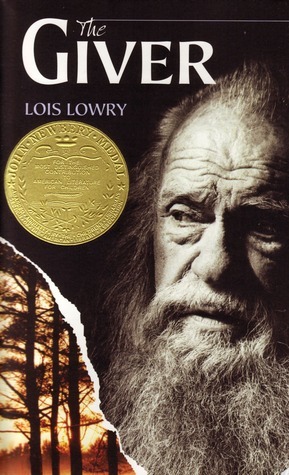
The Giver
Lois Lowry
We may earn a commission on purchases — at no cost to you. As an Amazon Associate we earn from qualifying purchases. Disclosure.
The Giver is Lois Lowry's landmark young adult novel set in a seemingly perfect society where pain, conflict and choice have been eliminated through careful control. Twelve-year-old Jonas is selected to receive all the memories of the past, from the old man called the Giver, and in learning humanity's full history, its beauty and its cruelty, he discovers that his society is built on the erasure of what makes life meaningful. It is a profound meditation on the cost of safety, the necessity of choice and suffering, and the irreducible complexity of human experience.
- 1Jonas lives in a community where everything is controlled: language is precise, emotions are suppressed with daily medication, and history is erased.
- 2At the Ceremony of Twelve, Jonas is selected as the Receiver of Memory and begins training with an elder called the Giver.
- 3The Giver transmits to Jonas the memories of the past: joy, love, music, colour, but also pain, suffering, war and death.
- 4Jonas learns that the society has eliminated choice, and that those who do not fit are 'released', a euphemism he comes to understand with horror.
- 5His sister Lily represents the complacency of those who accept the world without question, while his parents are kind but unthinking.
- 6Jonas chooses to flee the community, carrying memories with him, an act that frees the community from forgetting but costs them everything.
Key ideas
Safety as a kind of death
Lowry's central insight is that a society built on the elimination of pain is also a society stripped of joy, beauty, choice and authenticity. The Giver describes it as perfect, but Lowry asks whether perfection without meaning is worth the cost. The society is not oppressive but numbing.
The necessity of suffering
The Giver argues that suffering, properly understood, is inseparable from meaning and growth. A life without pain is a life without depth, without choice, without the capacity to truly care about anything. Lowry refuses the idea that we should engineer away suffering; she argues it is part of what makes us human.
Memory as moral weight
The Giver's role is to hold all of humanity's memories, including the horrific ones. Lowry suggests that a society can only be innocent if someone else bears the weight of its past. Jonas, in becoming the Receiver, takes on that burden and can no longer be innocent.
Language as control
The community uses 'precision of language' to control thought: they have no word for real emotion, no language for colour, no vocabulary for the complexity of experience. Lowry shows how language shapes and limits what we can think and feel.
Choice as sacred
The community has eliminated the possibility of choice in the name of reducing suffering, but Lowry argues that choice is what makes us human. A life of pre-determined paths is not a life but an existence, and Jonas's choice to flee is an affirmation of human dignity.
The ambiguous ending
Lowry closes the novel with Jonas and a child he has taken reaching a place of light and music, but leaves deliberately ambiguous whether they have reached true escape or death. The ambiguity forces readers to confront questions about meaning, sacrifice and what it means to be free.
Who is it for?
Readers who want a profound young adult novel that does not talk down to its audience will find this endlessly rewarding, and it works for both adolescents and adults. It suits anyone interested in dystopian worlds, the ethics of control, or philosophy disguised as fiction. Teachers and book club leaders return to it repeatedly.
Full summary
Jonas is a boy of eleven living in a community where everything is precisely ordered and controlled. His world seems perfect: there is no pain, no violence, no difficult choices, no hunger. Emotions are muted by daily medication, history is unknown, and the future is pre-determined.
Language is so precise that there is no room for metaphor, ambiguity or real depth of expression. The community calls an old man the Giver, who holds memories, though Jonas and his peers do not yet understand what that means.
At the Ceremony of Twelve, when children turn twelve and are assigned their adult roles, Jonas is selected as the Receiver of Memory, a rare honour and an unusual role. He is taken to the Giver to begin his training, and his world begins to transform.
The Giver begins to transmit memories to Jonas: he learns to see colour, to feel music, to experience love and joy in their full intensity. The memories are beautiful and overwhelming, a contrast to the grey, controlled world Jonas has known.
But the Giver also transmits memories of suffering: of hunger, of war, of loneliness and death. Jonas learns that the world has a full range of experience, and that the society has purchased safety at the cost of everything else. He begins to understand that 'release' is not a gentle transition but death.
Jonas learns that his father, who works in childcare, has 'released' children judged to be inadequate, and that his sister Lily, whom he loves, will one day be subject to the same system. His innocence shattered, Jonas grapples with the moral horror beneath his society's perfection.
The Giver tells Jonas that in the past, he was able to choose to leave the role of Giver, but that role was forced on him. He wants Jonas to escape and to carry the memories out into the world, which would force the community to confront its past.
Jonas flees the community with a young child he has come to love, Gabriel, who the society has marked for release. The novel closes with Jonas and Gabriel reaching a place of warmth and light and music, but Lowry leaves deliberately ambiguous whether they have found freedom or release. They carry memories with them, and the community, once Jonas is gone, must reclaim the weight of what it has forgotten.