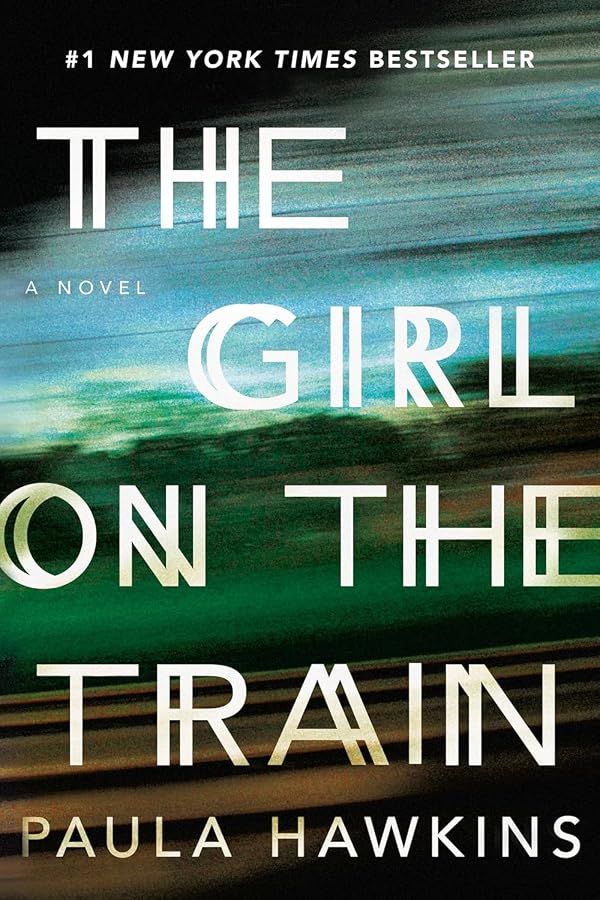
The Girl on the Train
Paula Hawkins
We may earn a commission on purchases — at no cost to you. As an Amazon Associate we earn from qualifying purchases. Disclosure.
The Girl on the Train is Paula Hawkins' psychological thriller about Rachel, a woman obsessed with watching a train pass near her ex-husband's house each day and observing the couple who live in a house she passes. When a woman goes missing from that house, Rachel becomes entangled in the investigation, though her unreliable perspective and her obsession complicate her ability to help. It is a novel about obsession, alcoholism and the unreliability of perception.
- 1Rachel is an alcoholic woman who rides the train daily past her ex-husband's house, watching it obsessively.
- 2Rachel has created an elaborate fantasy about a couple who live in a nearby house, imagining their perfect marriage based on brief glimpses.
- 3When a woman goes missing from that house, Rachel becomes convinced she saw something important related to the disappearance.
- 4Rachel's drinking and her unreliable perception make it difficult for the police to trust her account of events.
- 5Multiple perspectives are presented: Rachel's, the missing woman's, and that of Rachel's ex-husband's wife.
- 6The novel gradually reveals what really happened and the role Rachel may or may not have played in events.
Key ideas
Unreliable perception
Rachel's alcoholism and obsession distort her perception of events. Hawkins explores how we see what we want to see rather than what is real.
Obsession and isolation
Rachel's obsession with watching the couple isolates her and prevents her from forming real connections. Hawkins suggests that obsession is a form of loneliness.
Alcoholism and self-deception
Rachel's drinking is portrayed not as simple indulgence but as self-medication for emotional pain and a way of avoiding reality.
The danger of false witnesses
Rachel's involvement in the investigation complicates the search for truth, suggesting that obsessed witnesses can do more harm than good.
Multiple truths
The novel presents multiple perspectives, and each person's truth is shaped by their position and their interests. The 'real' truth is elusive.
Women as vulnerable
All the women in the novel are vulnerable in different ways: Rachel to obsession and alcoholism, the missing woman to violence, Rachel's ex's wife to manipulation.
Who is it for?
Readers who love psychological thrillers with unreliable narrators will find this compelling and page-turning. It suits fans of Gone Girl and other domestic noir. The novel is highly readable and popular, though it rewards careful attention to its unreliable narrators.
Full summary
Rachel is an alcoholic woman living in the suburbs and riding the train daily past the house where her ex-husband Tom lives with his new wife Anna.
Rachel has become obsessed with a couple who live a few houses down from Tom's house. She watches them from the train, naming them Jess and Jason and imagining their perfect marriage.
When a woman goes missing from the neighbourhood, Rachel is convinced she may have seen something important. She contacts the police and becomes involved in the investigation.
Rachel's drinking and her vague, unreliable memories make it difficult for the police to take her seriously. She can only provide unreliable fragments of what she may have seen.
The narrative alternates between Rachel's perspective and those of other women involved in the case, including the missing woman's perspective and that of Anna, Tom's wife.
Each perspective reveals different pieces of the truth, and gradually readers begin to understand that events are more complicated than any single perspective suggests.
Rachel's involvement in the investigation, driven by her obsession and her desire to be significant, complicates the police work and raises the stakes for everyone involved.
The novel builds toward revelations about what really happened, forcing readers to reassess what they trusted from each narrator.