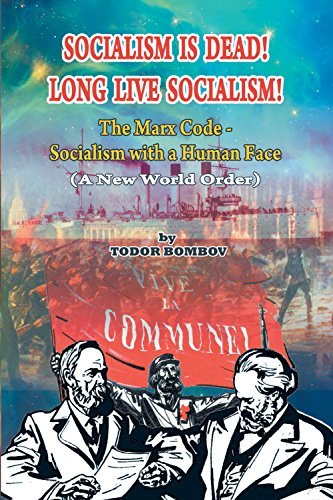
Socialism Is Dead! Long Live Socialism!: The Marx Code—Socialism with a Human Face: A New World Order
Todor Bombov
We may earn a commission on purchases — at no cost to you. As an Amazon Associate we earn from qualifying purchases. Disclosure.
Socialism Is Dead! Long Live Socialism! is Todor Bombov's political fiction exploring themes of power, ideology and social change in contemporary society. The novel examines how political ideologies shape lives and relationships.
- 1The novel is set in a contemporary society navigating political ideology.
- 2Characters are shaped by and respond to larger political forces.
- 3The novel explores different perspectives on socialism and political change.
- 4Personal stories are intertwined with larger political narratives.
- 5The novel questions what ideology means in practice.
- 6The novel explores both idealism and pragmatism in political life.
Key ideas
Ideology and reality
Bombov explores the gap between ideological belief and practical reality.
Political change
The novel portrays how societies navigate political transformation.
Individual and society
Personal choices are shaped by and shape larger political forces.
Power and powerlessness
The novel explores how individuals experience political power and lack thereof.
Hope and disappointment
Idealism and hope are tested against political and social reality.
The cost of change
Political transformation carries costs for individuals and communities.
Who is it for?
Readers interested in political fiction will find this engaging. It suits anyone interested in how ideology shapes lives and in contemporary political questions.
Full summary
The novel is set in a society navigating significant political and social change.
Characters represent different responses to political ideology and transformation.
The novel traces how characters' lives are shaped by political forces.
Bombov explores what socialism means to different people in contemporary context.
The novel portrays both those who embrace political change and those who resist it.
Personal relationships are affected by and reflect larger political divisions.
The novel questions whether political ideals can be realized in practice.
Bombov explores the tension between idealism and pragmatism.