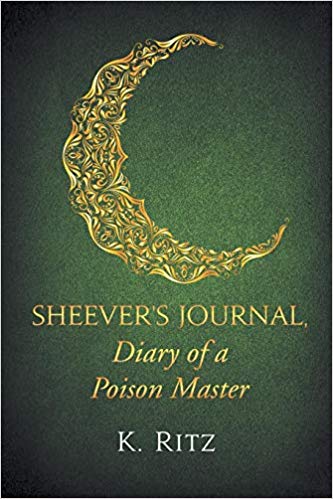
Sheever's Journal, Diary of a Poison Master
K. Ritz
We may earn a commission on purchases — at no cost to you. As an Amazon Associate we earn from qualifying purchases. Disclosure.
Sheever's Journal, Diary of a Poison Master is a debut fantasy novel told entirely as the private journal of Me'acca Mysuth Sheever, an assassin who has spent five years living undercover as a cook among people he was raised to consider enemies. K. Ritz uses the diary form to unfold a slow reveal: as Sheever records daily life to keep a promise, his buried past and his hardening sympathies for the people he meant to hate emerge between the lines. It is a character study of deception, identity and reluctant empathy, set in what the author calls a world of shadows.
- 1The novel is written as a first-person journal kept by its protagonist, so the reader learns everything through Sheever's own guarded entries.
- 2Me'acca Mysuth Sheever is an assassin, a poison master, who has lived in disguise as a cook among his sworn enemies for five years.
- 3He begins the journal after a mysterious woman sells him the blank book and extracts a promise that he record his deeds for study.
- 4Revealing his true past would mean death, so the entries start cautiously and disclose his history only gradually.
- 5As the journal continues, Sheever becomes far more entangled in the lives around him than he wanted, and more sympathetic to people he intended to despise.
- 6It is K. Ritz's debut and the first book in a planned series set in the same world of shadows.
Key ideas
The journal as a slow unmasking
The entire novel is Sheever's diary, which means the reader is confined to what he chooses to write and when. He starts by describing safe, surface things, his work as a cook, the people he must tolerate, and lets hints of his real identity surface only as trust builds. The form turns the act of reading into an act of decoding a secretive man.
A spy who starts to feel
Sheever's central conflict is that undercover life was supposed to keep him detached, but proximity breeds attachment. The people he was sent to hate become individuals to him, and he finds himself caring against his own intentions. The book's emotional engine is this unwanted erosion of an assassin's hatred into reluctant empathy.
Identity held under threat of death
Because exposure would be fatal, Sheever must maintain a false self at every moment, and the strain of it wears on his sanity. The novel is preoccupied with what constant deception does to a person's grip on who they are. Memory and guilt press on him even as he performs the role of a harmless cook.
The promise and the mysterious woman
The framing device, a stranger who sells him the journal and binds him to record his life for study, gives the book its premise and a note of the uncanny. Her maxim, that the steps of a life mark the journey of the soul, sets up the diary as a spiritual accounting as much as a record of events, hinting at forces beyond Sheever's control.
Waiting for a signal to go home
Throughout, Sheever both prays for and dreads the sign that his years of exile are over and he may return home. That divided longing, wanting release yet fearing what leaving would mean for the ties he has formed, captures the trap of a man who has lived a lie so long that the lie has grown its own real roots.
Who is it for?
Readers who enjoy character-driven fantasy told through an intimate, unusual format will appreciate the diary structure and the slow reveal of a secretive narrator. It suits fans of morally complex protagonists, undercover intrigue, and self-contained fantasy worlds who like discovering newer independent authors. Readers drawn to introspective antiheroes wrestling with identity and buried guilt will find Sheever a distinctive companion.
Full summary
Sheever's Journal is presented as the actual diary of Me'acca Mysuth Sheever, and the novel never steps outside his written entries. Everything the reader learns is filtered through his own cautious, secretive account of his days.
Sheever is a poison master, an assassin, who has spent five years living undercover among people he regards as sworn enemies, disguising himself as a humble cook. Maintaining this false identity is a constant, exhausting act of survival.
The journal itself comes into his hands when a mysterious woman sells him the blank book and makes him promise to record his deeds for study, telling him that the steps of his life mark the journey of his soul.
He begins writing carefully, describing only the safe surface of his life, the place where he works and the people he is forced to endure, wary that any admission of his true past could cost him his life.
As the entries accumulate, hints of who Sheever really is and where he came from begin to emerge, and the diary becomes a gradual, guarded confession as much as a record of daily events.
Against his own intentions, Sheever finds himself drawn into the lives of those around him, growing more entangled and more sympathetic to people he had meant only to hate, which unsettles the detachment his mission required.
Haunted by memory and guilt, and straining to hold onto his sanity under the weight of permanent deception, he both longs for and fears the signal that his years in exile are finished and he can finally return home. The book is the first in a planned series set in the same world of shadows.