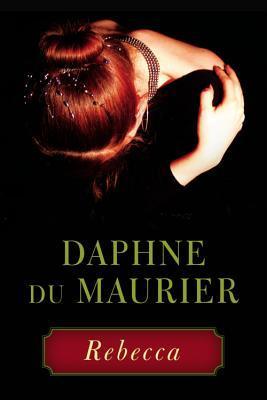
Rebecca
Daphne du Maurier
We may earn a commission on purchases — at no cost to you. As an Amazon Associate we earn from qualifying purchases. Disclosure.
Rebecca is Daphne du Maurier's masterpiece of gothic suspense, narrated by an unnamed woman who marries the wealthy, brooding Maxim de Winter and moves to his grand estate, Manderley, only to find herself haunted by the memory of his first wife, Rebecca. The new Mrs de Winter is tormented by the invisible presence of her predecessor, a woman who seems to have been perfect and beloved, and whose death remains shadowed in mystery. It is a novel of psychological suspense, obsession and the dangerous weight of the past.
- 1The narrator, never given a name, is a young, timid woman who becomes companion to a wealthy widow and meets the aristocratic Maxim de Winter while abroad.
- 2She falls in love with Maxim and is astonished when he proposes and takes her to his vast estate, Manderley, where he was married to the beautiful and accomplished Rebecca.
- 3Rebecca has been dead for over a year, but her presence permeates Manderley: her room is kept as a shrine, the servants still speak of her with reverence, and Maxim seems haunted by her memory.
- 4Mrs Danvers, the intimidating head housekeeper, was devoted to Rebecca and makes clear her contempt for the new Mrs de Winter, who she views as an intruder.
- 5The new wife struggles with inadequacy, never able to fill Rebecca's shoes or win the affection of those who loved her predecessor.
- 6The mystery of Rebecca's death gradually unfolds, with revelations that force the narrator to reconsider everything she thought she knew.
Key ideas
The power of the absent presence
Rebecca is dead before the novel begins, yet she is the most powerful character in it. Du Maurier creates a woman so omnipresent through absence that the narrator is haunted by someone she never knew. Rebecca's shadow is more real than any actual person in the narrator's new life.
Gothic atmosphere as psychology
Du Maurier uses the gothic elements, the grand house, the mysterious death, the loyal retainers, the dark secret, not for simple thrills but to externalize the narrator's inner turmoil and insecurity. The house is both setting and metaphor for the narrator's trapped, anxious mind.
The perfection that destroys
Rebecca is described as perfect: beautiful, accomplished, beloved by everyone. This perfection is what torments the narrator, who can never measure up to an ideal. Du Maurier suggests that perfection is an impossible standard and a form of cruelty.
Secrets and lies as foundation
The marriage, the household and indeed Manderley itself are built on secrets and lies. What appears solid and familiar is built on an unstable foundation. The narrator slowly learns that nothing at Manderley is what it seemed.
Mrs Danvers as the past personified
Mrs Danvers is the keeper of Rebecca's memory and the narrator's primary tormentor, representing how the past, when it is clung to obsessively, can poison the present. She is not evil so much as imprisoned by loyalty to something dead.
The narrator's awakening to complicity
The narrator gradually stops being a passive victim of circumstance and begins to understand the truth. Her awakening forces her to reconsider her marriage, her husband and her place in Manderley. She becomes a participant in the story rather than its audience.
Notable quotes
“Last night I dreamt I went to Manderley again.”
— opening line
Who is it for?
Readers who love gothic suspense and psychological complexity will find this a masterpiece, and it remains a gold standard of the form. It suits anyone interested in atmospheric mystery, the psychology of obsession and fear, or the unreliable narrator. Readers of The Thirteenth Tale or Rebecca-inspired modern works will appreciate its foundational influence.
Full summary
The narrator, unnamed throughout the novel, is a young, timid woman employed as a companion to a wealthy widow on the Riviera. She meets Maxim de Winter, a man of great wealth and evident sorrow, and despite their class difference, he takes an interest in her.
Maxim eventually proposes, to the narrator's astonishment. He is clearly a man burdened by something, but she is young enough and naive enough to believe that love and a new beginning can transform him. She accepts and they marry, and he takes her to his family estate, Manderley.
Manderley is vast and grand, a house of considerable beauty and history. But it is also shadowed by the presence of Maxim's first wife, Rebecca, who died in a boating accident a little over a year earlier. Her death is treated as a tragedy by everyone in the household.
The narrator quickly discovers that she is living in Rebecca's shadow. Rebecca's bedroom is kept exactly as it was, and the servants, particularly the formidable head housekeeper Mrs Danvers, speak of her with a reverence that makes the new Mrs de Winter feel impossibly inadequate.
The narrator is tormented by her inability to measure up to Rebecca, who seems to have been perfect: beautiful, accomplished, beloved by everyone. She struggles with authority in the household, and every attempt to make changes is met with resistance from those loyal to Rebecca's memory.
Mrs Danvers becomes the narrator's tormentor, making clear that she views the second Mrs de Winter as an unworthy replacement. She tells stories of Rebecca's elegance and charm, deliberately intensifying the narrator's sense of inadequacy. Maxim, meanwhile, seems to withdraw into himself whenever Rebecca's name comes up.
A mystery at the local beach gradually unfolds when a wrecked boat surfaces and bones are discovered inside. The boat belonged to Rebecca, and the body inside is revealed to be Rebecca's, not the man she supposedly drowned with. Questions about how she came to be there and how she died begin to unravel the official story.
The truth emerges: Rebecca was not the perfect woman everyone remembered. The narrator learns terrible secrets about her predecessor, and in understanding Rebecca, she comes to understand Maxim, herself, and the true nature of their marriage. The novel ends with Manderley burning, a final destruction of the past.